SPAN 330 – Hispanic Literature
Debate #1: La religión y la cultura
 Loading…

 Reload document
  Open in new tab
Loading…
Open in new tab
Loading…
In the first debate, I argued that the coexistence of multiple religions in Spain helped to unify the country and create a strong national identity. I will admit that this position was difficult to argue since Catholicism holds a strong presence in Spain. However, while I was writing my position statement, I realized that the reign of Alfonso X during the 13th and 14th centuries of Spain actually paved the way for tolerance towards religious minorities including Jewish and Muslim people.
Debate #2: Los marginalizados
Loading…
Loading…
In my position statement for the second debate, I discussed how women are able to overcome the struggles associated with living in a patriarchal society. As a pre-medical student, feminism is an important cause for me because many women and marginalized groups have limited access to healthcare. Therefore, reading about women’s struggles for equal rights was incredibly helpful for me and my future career.
Artifacts 1 and 2
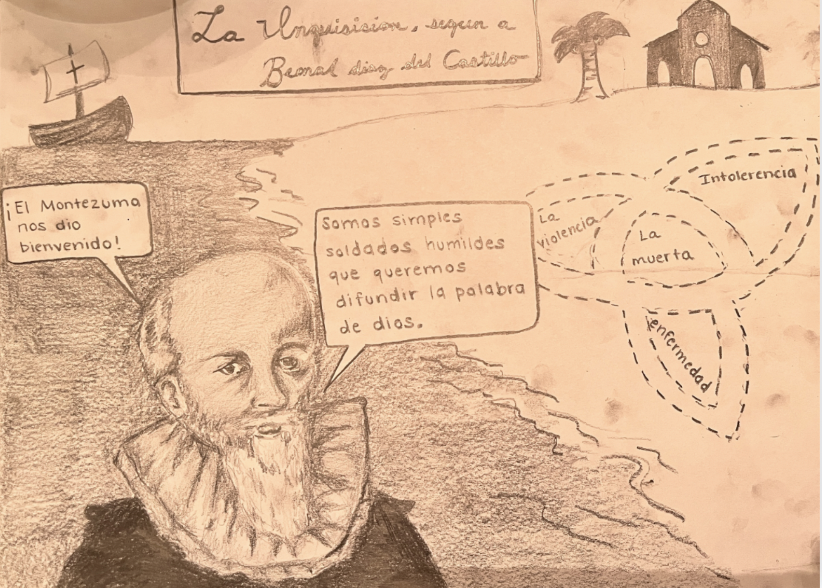
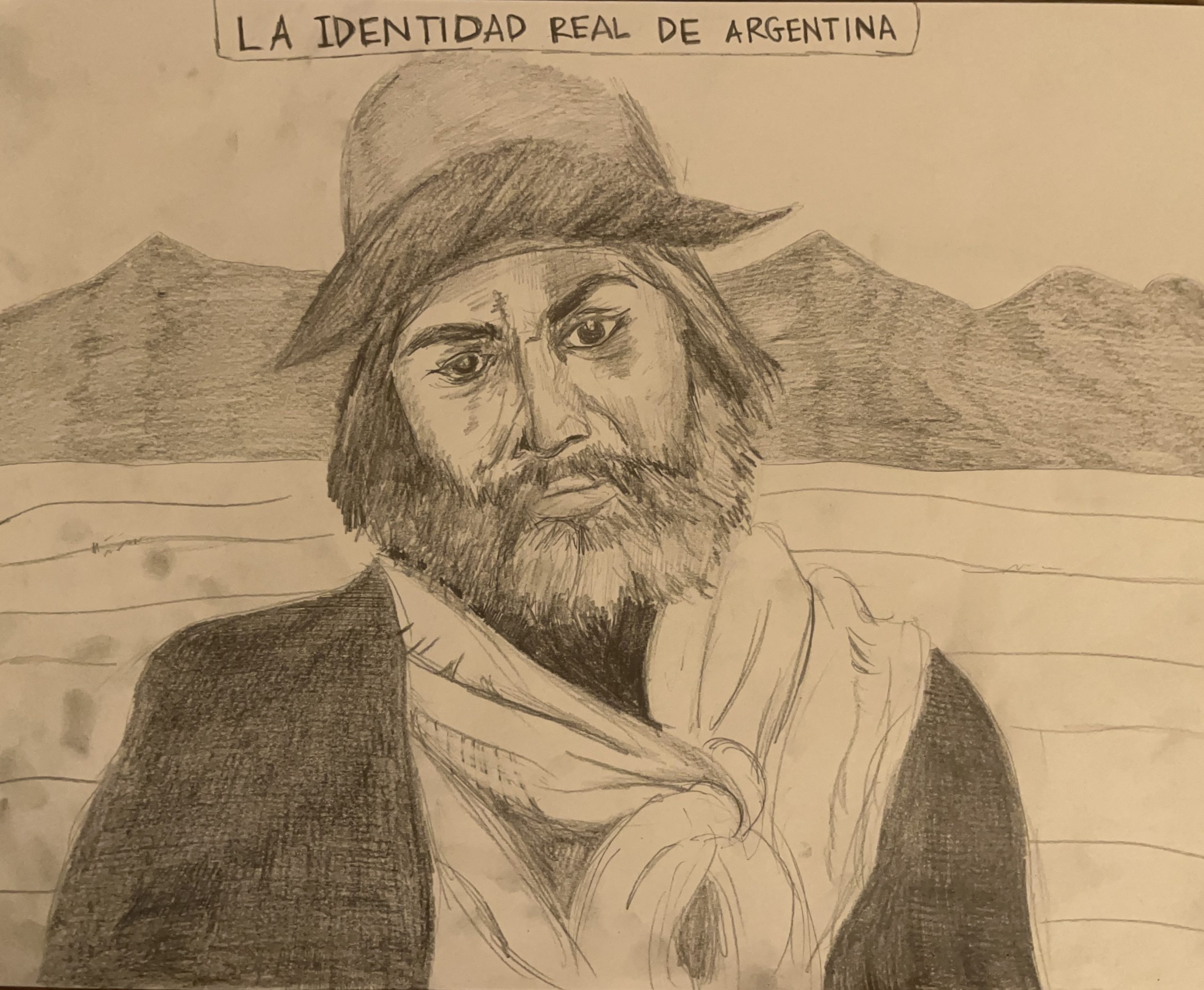
I have a passion for visual art, and I love to incorporate it into my assignments.
In the first artifact, I incorporated the writings of Bernal Díaz del Castillo, a Spanish explorer during the early 16th century, into a political cartoon. In his account of the treatment of indigenous populations, Díaz del Castillo justified the inquisition on religious grounds, stating that it is their duty to spread Christianity to the New World. However, the indigenous populations endured harsh punishments and unfair treatments, which were not accounted for in Díaz del Castillo’s manuscripts.
In the second artifact, I chose to depict José Hernández’s Martín Fierro, who was a gaucho in Argentina during the late 19th century. In this epic poem, Martín Fierro, an outcast from society, was drafted to serve the Argentine army to fight against native populations. However, Fierro ends up fleeing in a series of events that lead him to become an outcast once again.
Reflecting on both of these artifacts, I find it interesting how different Díaz del Castillo and Martín Fierro’s attitudes were towards indigenous people. While Díaz del Castillo openly justified controlling native populations in Latin America, Fierro does not take race or ethnic background into account.
Completing these artifacts helped me understand the main ideas behind these two stories while implementing some creative elements.
Recent Comments