ATA5
From participating in assignment 5’s activity, I have learned that doing something for strangers can not only make the other person happy, but yourself as well. All of the deeds I have performed from assignment 5 has taught me that I can help people regardless of the status I have towards them. For example, I am just someone’s family member towards my brother’s team mates, an employee who works register, stranger who helps when someone is struggling, etc. I can relate this assignment’s activity to what I was taught in Psychology (Intro. and Adolescence). I was taught in these courses that people act the same way as their peers, the more they hang out with someone. Their peers are one of the main influences on who they are. If their peers were to do something nice, they would treat them and others the same way.
After doing assignment 5’s activity, it is relevant to me because doing something for someone can make me feel better about myself, as it adds a boost of motivation in my life. This assignment made me realize that, I would want people to help me if they saw me struggling, and telling me I can get through it, even without saying the exact words. For instance, I was struggling in one of my courses last semester (Asian History), and one of my classmates noticed and decided to help me understand what was being taught. This was one of the courses I was struggling in last semester, and almost dropped out. If it wasn’t for my classmate, I wouldn’t have continued the class. It is the little things that can help a person, change their decision.

ATA4
Taking assignment 4, I learned that there are 6 styles of a relationship: Storage, Eros, Ludus, Pragma, Mania, and Agape. describe. These are like the different levels of love and it showered how it was portrayed in my life. This assignment taught me that there are some things can affect the way I took the questionnaire, like how long I have been with my partner, or if I think highly of the answer, because I think he is the one for me. I can apply what I learned to one of my units from last semester in Sociology, when we talked about family. For instance, I learned in sociology that courtship is the period of development in a relationship where the individuals look forward to marriage/ a long term partnership. This can be connected to the style of love of Pragma, which talks about the individuals and thinking about the future
An example of one of the styles of love from my life would be from the style of Pragma. From taking the questionnaire provided for the activity, Pragma, was one of the categories that I scored a low kind of love (above the average female). Questions from the questionnaire asked if we, my partner and I, talk about the future together, although we do, we barely think about it that much. For instance, it would talk ask if we think they would reflect on our career. I never thought about that until I took the questionnaire. Another example would be of parenting for the future; this is something that we don’t have the same ideas on. The image I have included are the different styles of parenting, which would help me see what kind of style of parenting I could possibly do.
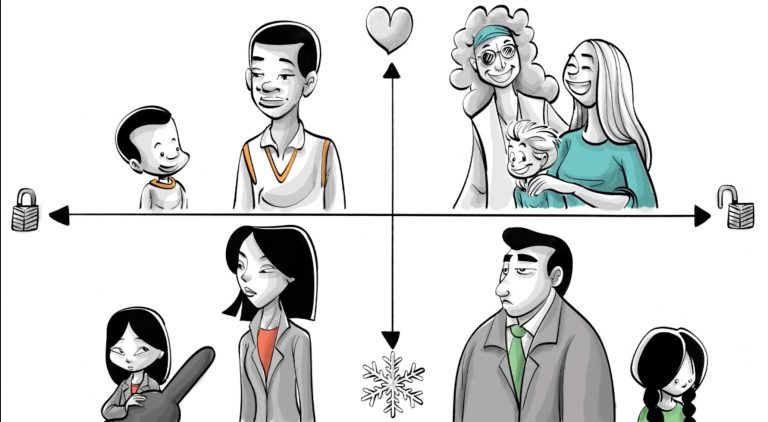
https://sproutsschools.com/5-styles-of-parenting/
ATA3
From assignment 3, I learned that anger can lead to a person saying things that are racist, and them not caring about what they said, even though it offended others. This assignment was on Michael Richard getting upset at a couple of audience members during his stand up, due to them disrupting and talking during his set. My reaction to this was that it left me shocked that a well known person can say these racist comments and still be praised for being on television. This assignment also taught me that, many famous people can get a way with these types of acts, when normal people/ who are less famous can be bashed for what they say. In some way I can apply this to our topic of stereotyping, because people believe whatever they hear about a race. From this, they can use it to their advantage and use it in a negative way, making the other person feel offended.
I can relate to one of these acts from the audiences’ point of view, from being who I am. I am an Asian American, which means I was born in America. There was this one time when I went out with my friends, and I heard a racist person yell out “Go back to your country!” I thought I would never hear this in real life, since I see it all over the internet, but it did. I was just talking to my friends, not paying attention to the person who said it, which got me uncomfortable after he said it, so we left the place we were at.

I incorporated this image for assignment 3, because racial comments are towards everyone, and recently with everything that has been happening in the world, Asians have been receiving this hate. It’s not just the racial slurs that people receive that make them offended, it is also the comments that can follow.
ATA1
At the end of assignment 1, I was taught the 4 heuristics of social cognition, and noticed that I have done each of them without knowing. I have dealt with these heuristics while at work, school, and even when I’m watching a movie. All the heuristics, representativeness, availability, anchoring and adjustment, and status quo, had to deal with thinking in order to come up with an answer. With these heuristics, a person can conclude incorrect inferences, as it is based on ones beliefs. My beliefs and ways of categorizing things can be different from the person who I sit by in the classroom.
During this semester, I applied the representativeness heuristic in my microbiology lab, as I had to classify the type of microorganism by the size, shape, color, etc.. Although, with trying to classify the microorganism and the representativeness heuristic, there can be a possibility of getting the wrong answer. Recently, my parents were dealing with the heuristic of anchoring and adjustment, as we were in the process of getting our house. My parents put in an offer that was below the assigned price online by the owners, and then the owners responded with a price above ours, but below their initial price. This was an on going process until a compromise was set, which finalized the process. With anchoring and adjustments, I find it similar to bargaining, when one person thinks of a price that is too low they would go for something higher, and vice versa, until the negotiation is over.
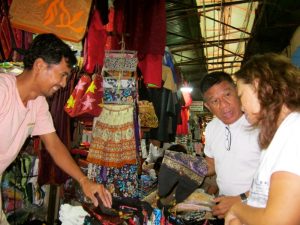
“Bargaining in Phnom Penh. Source aesta1” https://www.goglobaltoday.com/bargaining-in-asia.html