Artifact 3:
The top artifact that I chose was from Module 12, which dealt with aggression statements, and choosing which ones I believe showed or displayed aggression. The reason why I liked this archive, and chose it over the other archives was because of the statements on the questionnaire. In other words, the statements made me think of whether it was aggression or not; some of the statements had me think critically. For instance, the example of Mr. X and how he gossips. To me, I was on edge of if it was showing aggression, since he didn’t conflict physical harm to someone, but he did however create mental harm, as he talked about someone behind their back. What I learned from this activity was that even though when you think of aggression as being mad and showing harm towards others, aggression can be talking about others or just simply showing that you are protecting another. An example of protective aggression can be with the example of the dog snarling at the mail person. It doesn’t show any physical harm, however it does show that the dog is trying to protect the home and the owners from the so called, “stranger.” After working on the archive activity, it expanded my knowledge on aggression by showing me that aggression doesn’t need to be physical, but can be mental, it doesn’t need to be towards only living things, and sometimes on the way you think of a situation dealing with survival and someone’s or something’s role in life.
The image I have selected to represent my top artifact #3 is of a lion. The reason why I chose a lion to represent the topic of aggression is because the aggression of a lion can be determined from different aspects of what and who the lion is. For example, similar to the statement about the snarling dog from the questionnaire activity of module 12, a lion would show their stance to anyone who comes their way. Another point of view can be when the lion pounces at their food, this can be a reason of survival, similar to the spider example from the questionnaire. To add on, male lions would fight each other to see who takes over the pride (group). Depending on what is seen as aggression can be difficult, because sometimes it can be used for survival.

Artifact 2:
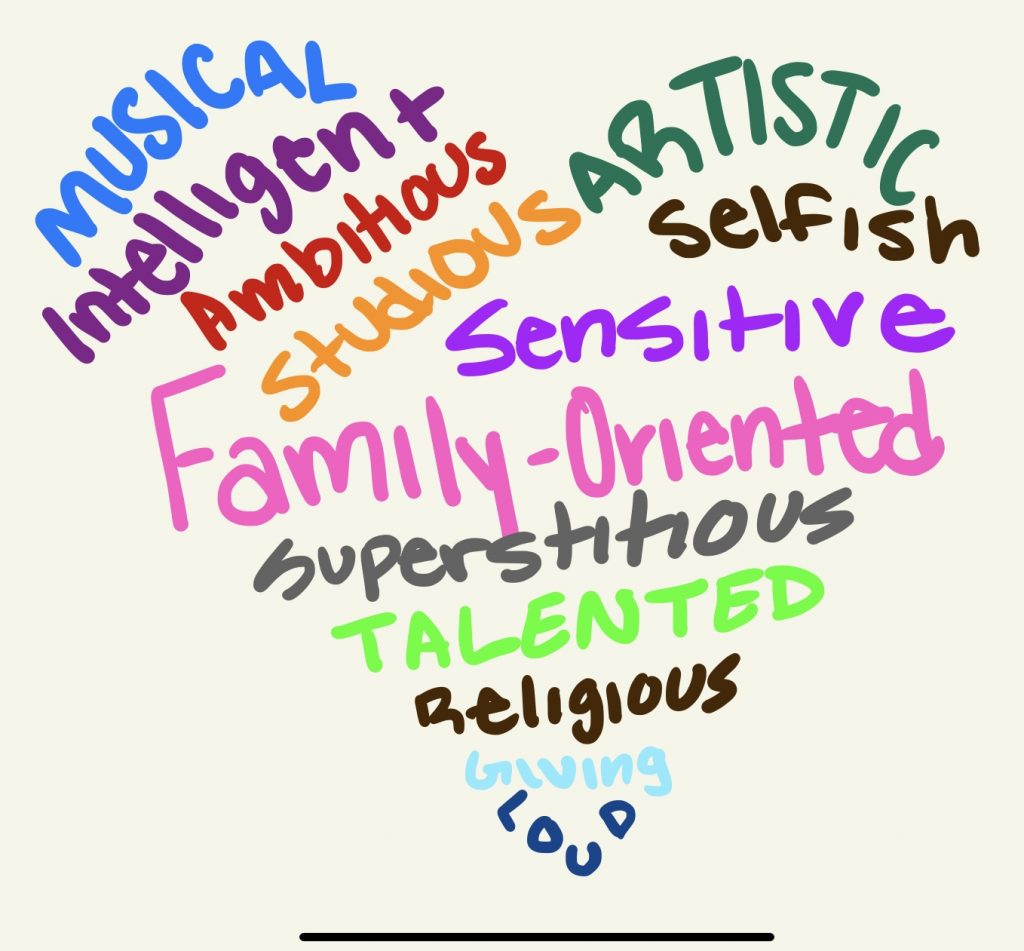
My top Artifact would be from module 8, Archive 6. The reason why this was my top selection from modules 7-10 was because it made me think about how people judge others based on what they saw online. Most of what is said about another race is from how people perceive it from videos online, movies, or friends. The activity showed me how people can see other races differently, since it allowed me to describe races compared to Katz and Braly (1933) and Gilbert (1951). From the activity I learned that most people would think the same about a race, when sometimes it can be completely different. For example, with one race a person can call them lazy hen others would describe them as intelligent. In my opinion, I think this could bee due to racial bias. This activity expanded my knowledge on stereotyping, prejudice, and discrimination, by showing me that people’s way of thinking can have an effect on how they would describe others. Everyone has a different thought process, which can shift the way they would perceive someone else.
The visual image I have inserted was from my my module 8 activity, which instructed me to create a word cloud for the group I was a part of. I am a Filipino-American and this is how I see myself and my family. Growing up I noticed that we can be caring most of the time, but there is a point in time where it is, “go ahead, it’s your life,” which gives us little independence. I noticed that people can categorize filipinos as either being a singer or dancer “b-boy”, which is why i included musical and artistic. There may be similarities in how you would also describe the group, but some you may disagree on, which is something the activity has shown me.
Artifact 1:
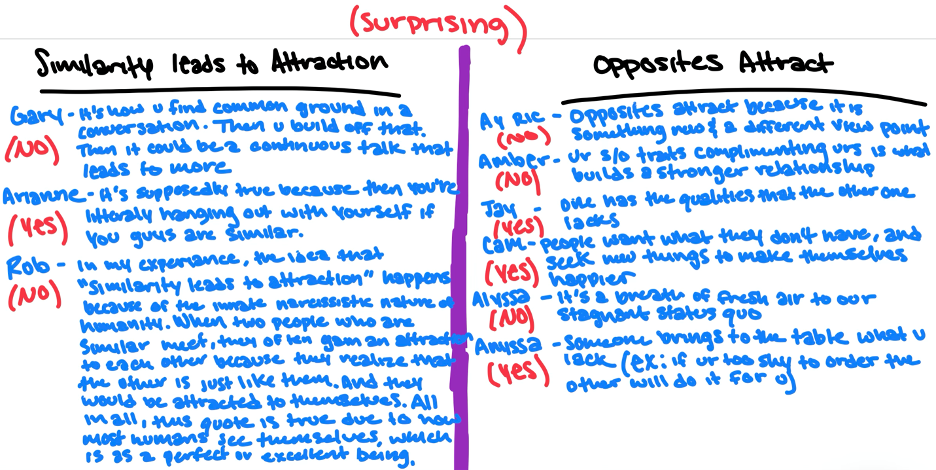
My top ‘Item to Archive’ was from module 3, with the idea that people have different perspectives on an idea, and that we should still be open to what they have to stay, regardless of what you believe. I enjoyed working on this archive, because it allowed me to communicate with people who I haven’t talk to in a while and to those I talk to everyday, to see how they think on the idea of attraction. For instance, I was able to get feedback from my brother, all the way to my friends from high school, who now go to different colleges. What surprised my the most were the answers I received from my friends, because some of them are in relationships, and the question I gave them was opposite from their current situation. From this activity, I learned that regardless of what people think, there are many sides and perspectives to one question or thought. Just like how people say, “there are always two sides to every story,” in this case, multiple. This topic allowed me to expand my knowledge by allowing me to see that, we shouldn’t base things solely on what we see, because what they show on the outside, doesn’t always describe what is happening on the inside.
The image I included represents the data in which I received from the survey, from the ‘Item to Archive’. This data shows the general idea of what people had to say about the question in which I gave them: Similarity leads to attraction or opposites attract. Some of the responses surprised me, but others were what I thought they were going to say. In all, I gained some new perspective to each of the questions, on what attracts people, whether it was something they had in common or if they were different all together.