Interpretive, Interpersonal, and Presentational Modes of Communication
Exploring Culture
Despite being an American, Hispanic culture is not entirely lost on me. I grew up in the depths of Florida with Cuban neighbors and Mexican friends. Of course, the experiences I’ve had only scratch the surface of the complex and varied cultures that one can find throughout the Spanish-speaking world. On this journey of cultural discovery, I found aide in one surprising product: Coca-Cola.
Mexicans and Coca-Cola go hand-in-hand. Growing up, it was a common stereotype. The number of Spanish Coca-Cola ads I saw on television as a kid is insane. For the majority of my life, this assumption existed at the back of my skull, having little to no impact on me personally.
It is only now, many years later, that I understand the gravity of that stereotype. Mexico has long been at war with itself, devoured from the inside by a desire to consume the sugary drink. On average, a Mexican citizen consumes two liters of Coke a day. As a result, one third of Mexicans have diabetes. Today, I recognize that generalizing something without a second thought can mask the suffering of others.
Engaging in Communities
Engaging with your community is a great way to directly improve your own experience. Forming strong relationships with the people around you can greatly increase your happiness and general wellbeing. It can provide a safety net when the world turns upside down or an entourage when it’s time to celebrate.
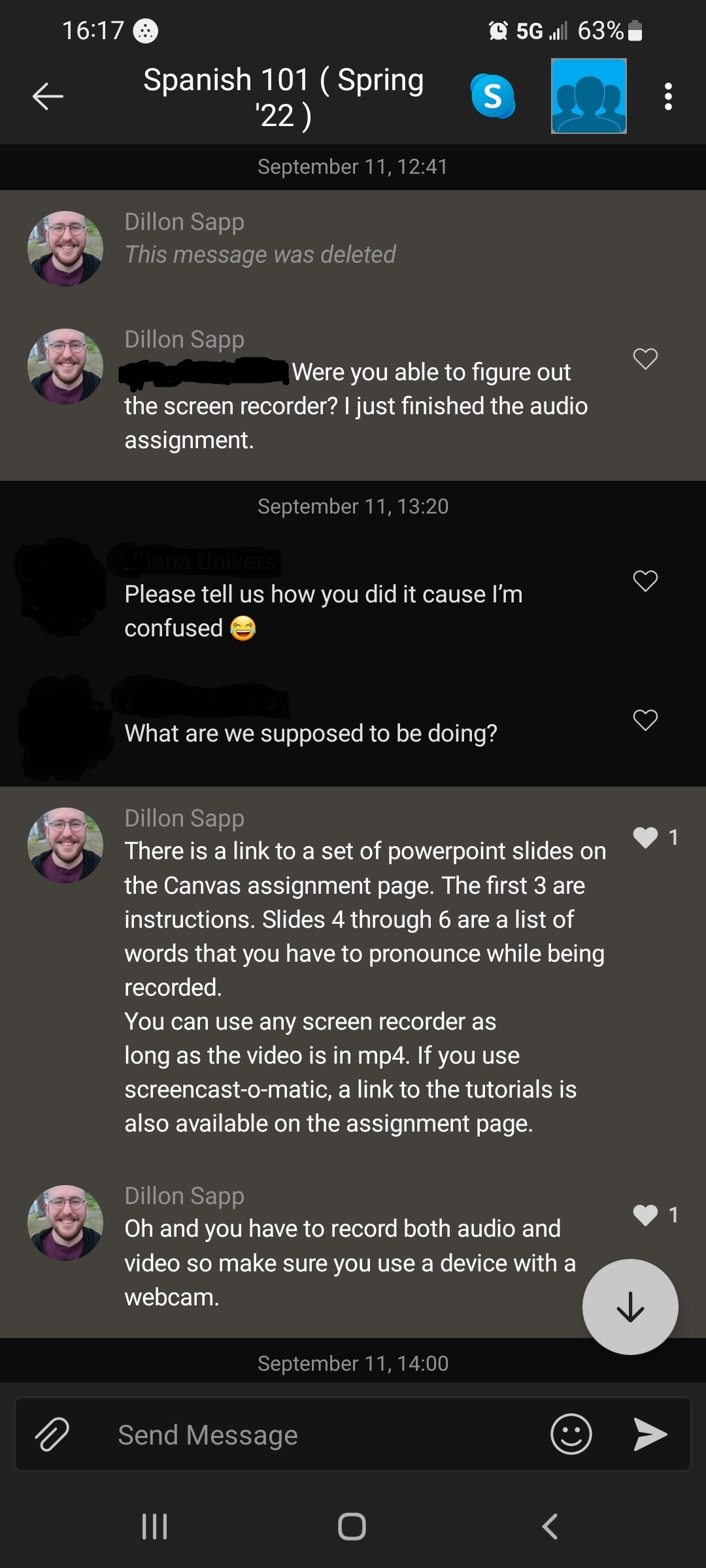
For the first time since applying to go to college, I’ve found myself developing relationships with my classmates. At the start of the semester, a number of my classmates and I joined a GroupMe text to discuss assignments, remind one another of deadlines, and so on. Being able to discuss with my classmates proved invaluable throughout my Spanish class. They were able to help me develop my grammar and answered questions when something confused me. Most importantly, it opened me up to the idea of developing relationships with my classmates in future courses.
Interpersonal Communication
Another tool my classmates and I used to discuss was our classroom’s discussion forum on the main educational platform Canvas. With it, we were given the opportunity to discuss the histories of different Spanish-speaking cultures, our personal interests and hobbies, the people in our lives, and how Spanish-speakers see the world.
Being able to relate to my peers while learning a new language has been very helpful for integrating it into my daily life. By sharing our interests and passions, we practice the act of using Spanish to describe our experiences and surroundings. As we’ve done more of these assignments, I’ve grown more comfortable with thinking of things in the Spanish language.
Presentational Speaking
My classmates and I learn collaboratively using a platform called Flipgrid. Flipgrid grants the user the ability to both post individual videos to a group channel and comment on other users’ videos. These capabilities give us a lot of freedom in our discussions and has given us a place to practice our conversational Spanish.
I am a particularly anxious person in general, but public speaking makes it a thousand times worse. It takes no time for the stuttering and clammy hands to kick in. It doesn’t even help that my audience is hidden behind a computer screen. This semester’s Spanish class gave me a safe environment to practice my public speaking. My classmates and I are all bad Spanish speakers, and that equal footing gives me enough confidence to press on. If I could go back and do this semester differently, I would have taken more opportunities to use this platform for open discussion in Spanish to better improve my skills.
Presentational Writing
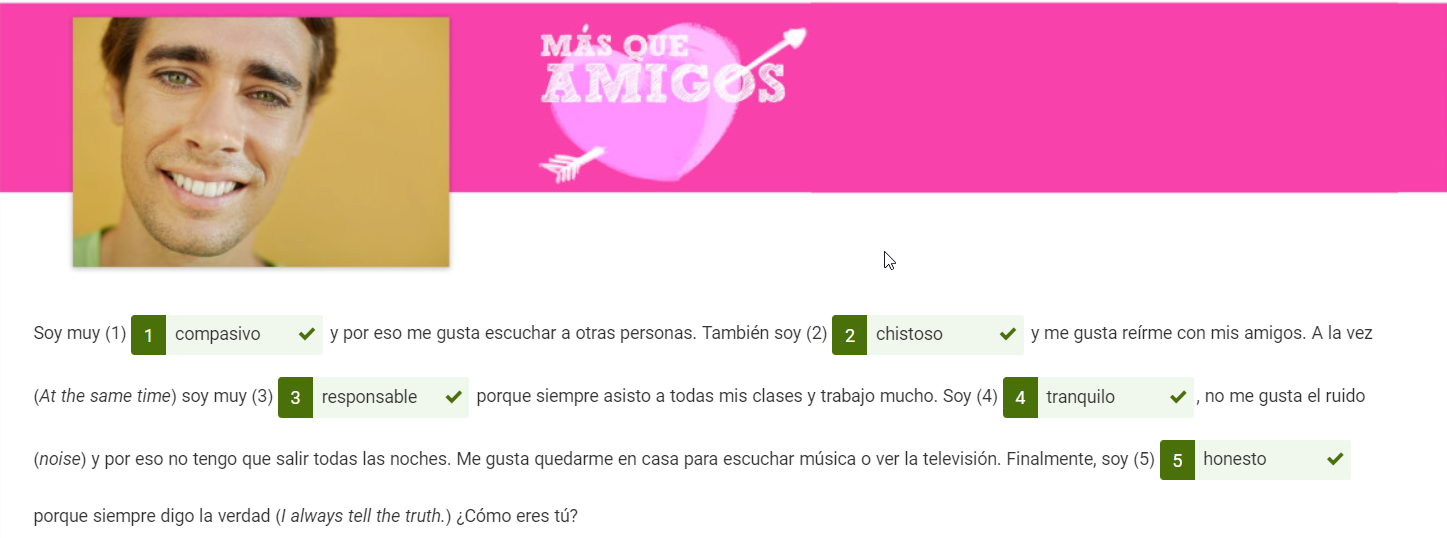
With each new module of Spanish comes a new list of vocabulary. I find each of these lists of vocables as daunting to learn as the last. The platform we learn Spanish with, LingroLearning, provides numerous examples of how to use certain words, then poses practice questions to improve our skills.
Initially, I found this practice difficult. The Spanish language has a few unique letters like í or ñ that made spelling a nightmare. As we progressed through the assignments, the constant practice of having to correctly spell Spanish words eventually paid off. By the end of the semester, I was able to effectively determine when these strange symbols are used correctly.
Interpretive Listening
Beyond teaching us how to spell, LingroLearning also provides audible examples and practice to enhance our listening abilities. By listening to different individuals say these words, matching them with their written counterparts, and interpreting their meanings, you can obtain a more firm grasp on how to use these words to express yourself. This practice comes in handy when it’s time to actually verbalize your thoughts to another person and then listen to them do the same.
I found the Spanish language particularly difficult to understand initially. A lot of Spanish-speakers tend to allow their words to flow into each other with little space or distinction. By practicing my listening skills over the semester, I’ve begun to recognize individual words as they’re being said. This applies even if they are melded with other connective words. It took time to recognize when Spanish-speakers commonly attach words together to maintain verbal fluidity. Now, I find it to be one of the most interesting aspects of the language, as English has little equivalence.
Interpretive Reading
Identifying real life examples in current events, stories, websites, and other media allowed us to use what we learned in class to interpret our world. I would argue that it is the most important part of learning a language. Our original purpose for communication was to describe our surroundings. For example, “There’s a lion behind you” or “don’t eat the yellow snow” are two useful sentences that describe one’s surroundings.
I’ve found Spanish the most interesting when I’ve used it to read about the world. In class, a number of assignments required us to read outside articles on Spanish-speaking countries. One assignment even had us compare our university website to others in Latin America or Spain. When I really began to enjoy reading Spanish for practice, however, was the first time I came across a post by an all-Spanish Instagram profile. My initial reaction was pride, I had successfully read the caption of the post without help. From there on out, I sought post after post to challenge myself with. It has given me a way to relate to the language while practicing my Spanish paragraph comprehension.