Interpretive, Interpersonal, and Presentational Modes of Communication
Exploring Culture
I frequently travel to the arid plains of Oregon for work. During my stays there, I like to take the opportunity to try the local cuisine. Since the region is mostly farmland, a lot of the food is grown, processed and put on a plate not more than a few miles apart. The town of Boardman is little more than a gas station and a post office, but it does have a fantastic hole-in-the-wall called Tienda Del Sol. This convenience store turned taqueria has some of the tastiest, freshest Mexican food I’ve ever had.
Spending my time around the owners in the way taught me a few things about what it is like to come to this country as an immigrant. This little store was the child of a dedicated family of Mexicans who came here like many others to find their happiness. Their business makes them far luckier than many of their friends and family. A lot of the work in these regions is manual labor. Being an agricultural laborer is often a grueling and dangerous job. It pays little, has no benefits, and is exempt from most employment laws. Discrimination and abuse are rampant. It has been a really eye opening experience to learn about the treatment of the people that put food on my table. I count myself lucky to have had the opportunity not only to each their food, but to grow because of it.
Engaging in Communities
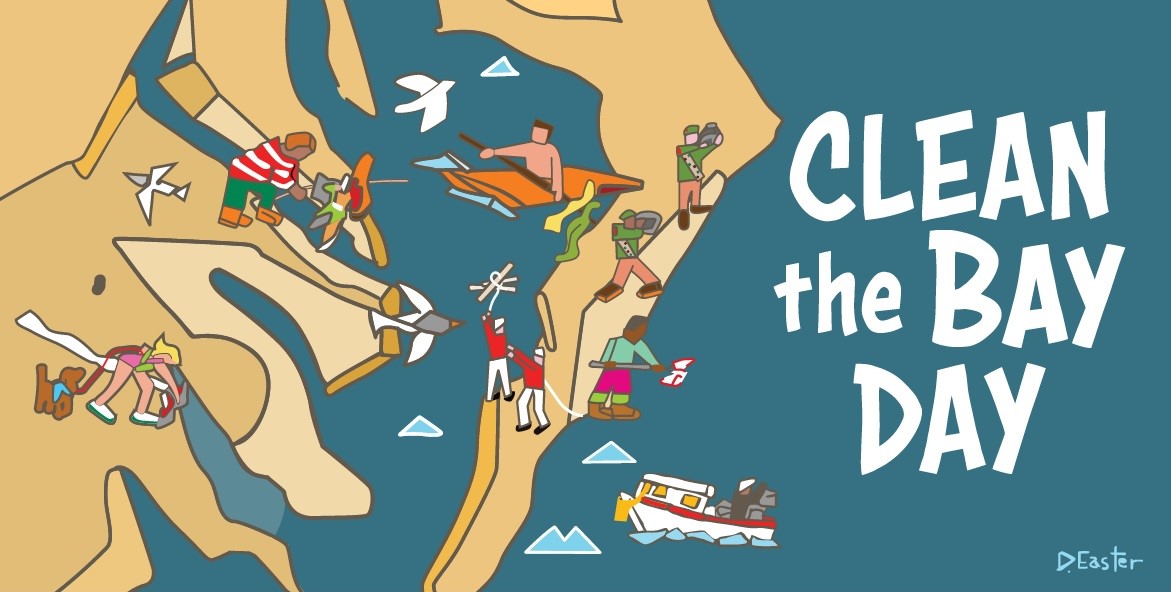
Every year, my wife and I participate in a long-standing annual event around the Chesapeake Bay coast: Clean the Bay Day. On the first Saturday of June, the inhabitants of the Chesapeake Bay area band together to clean debris out of our waterways. This preserves our ecosystems and keeps contaminants out of our waters. Since its inception in 1989, this event has helped to collect more than 7 million pounds of trash!
Participating in this event has given me the opportunity to explore the coastline of the Chesapeake Bay. I am originally from Florida, and finding locals reminiscent of the places I grew around brings me joy. It has deepened my connection with this community and provokes my desire to protect it. I feel more connected to my world as a whole when I spend time in nature and it’s events like this that give me the opportunity to do so. It reminds me to take the time to connect with the world around me. As a modern human, I find it increasingly difficult to find these moments.
Interpersonal Communication
Throughout the semester, our Spanish course tested us with a range of communication activities. One of these, Flipgrid, is a unique online tool that allows its users to communicate with video. Another example include discussion forums that provide a platform to speak on specific topics and comment on our classmates’ contribution. In the Flipgrid video above, I am completing a prerecorded conversation with my Spanish teacher.
Assignments like this one were especially helpful in developing my conversational abilities. Spanish is really difficult to learn, and it can be overwhelming to use in the real world. Since the conversation is prerecorded, I can take as many attempts to work through the conversation. I am able to think about and refine my responses until they mean exactly what I want them to. I can practice my pronunciation repeatedly until I’m satisfied. It is a time when I can make mistakes with no concern for consequences. This unique environment allowed me to grow more confident as a Spanish speaker.
Presentational Speaking
During this presentational speaking activity, I go over the pronunciation of the Spanish alphabet. Practicing pronunciation is vitally important to learning a new language. It helps to make difficult words feel easier.
During this exercise, I found the rolled r to be the most difficult sound to produce. Like many of my fellow novice Spanish speakers, the trill involved is both complex and brand new to me. My mouth doesn’t seem to understand the positions necessary to make the appropriate sound. Over time, I have managed to make improvements to this sound by doing extracurricular research, watching videos and reading articles on the subject of making a trill. While I’m by no means perfect, I have managed to come a long way from where I was in this video.
Presentational Writing
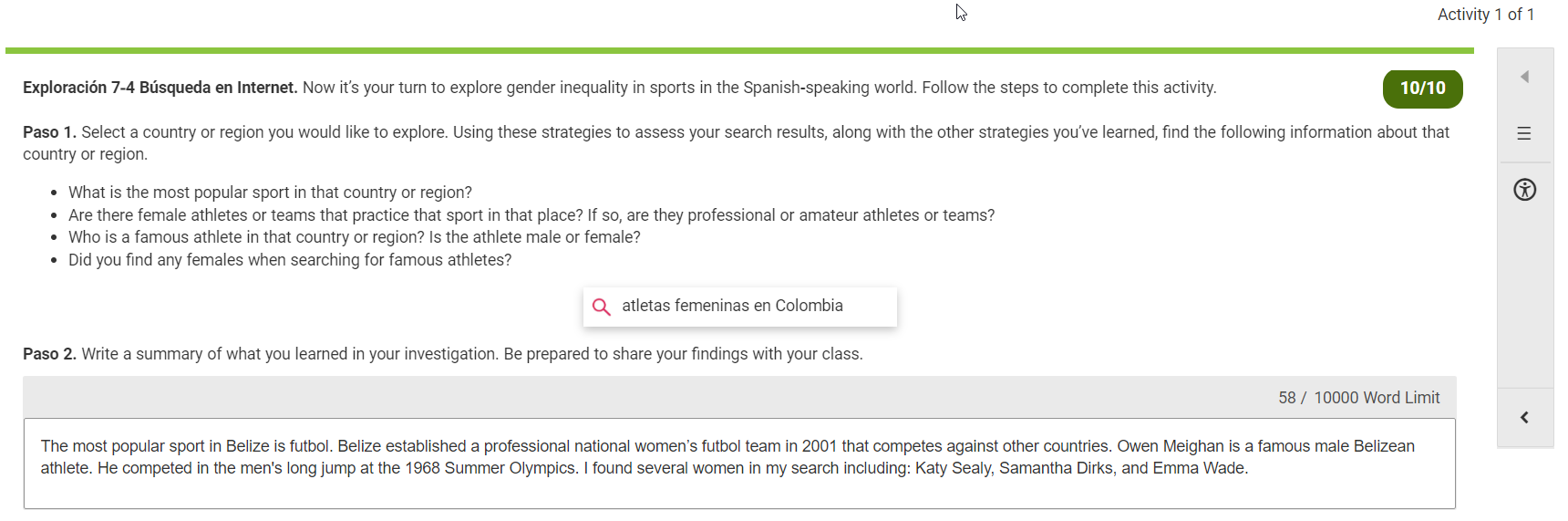
Another way to learn about the culture behind the Spanish language is through research. Throughout my class, I was charged with finding information regarding specific topics from the view-point of a Spanish-speaking country. In this example, I discuss the most popular sport in Belize.
This assignment provided me with a goal that introduced me to the country of Belize. Prior to this, I had little to now understanding of their culture, daily life, likes or dislikes. Learning how to Google information in Spanish was also a new and interesting challenge. Over time, I was able to refine my searches more appropriately for the information I was looking for, despite having little experience with performing research in Spanish.
Interpretive Listening
A tactic frequently utilized by my Spanish teacher were video quizzes. These short multiple-choice quizzes tested my ability to recognize words when spoken. As I have progressed through the class, the quizzes gradually became more and more difficult. Our instructor began to speak more rapidly, taking fewer pauses in between sentences, and utilizing more complicated sentence structure and grammar.
Being challenged in this way was particularly troubling for me. My biggest weakness when learning a new language has been recognizing spoken words. I am a capable reader and can often deduce the meanings of words via context. I have a strong paragraph comprehension. However, Spanish speakers often connect their words and allow one syllable to blend into the next. Being a native English speaker, this is far from the norm for me and has caused significant issues in the past. I am continuing to improve on this vital skill and intend on focusing more of my attention on it in the future.
Interpretive Reading
As referenced in presentational writing, a major tactic used in my Spanish course has been self-lead research. A topic is presented and we have to find information on that topic in regards to a Spanish-speaking culture.
Perusing Spanish-only websites was an interesting task for sure. It granted me the opportunity to use what knowledge I did have in a real-world setting. Using a language is not the same as completing a series of workbook activities with specific vocabulary. You’re going to run into words you don’t know, phrases that make no sense, and foreign grammar. At first, it was daunting. As I’ve become more comfortable, I’ve realized that the important part of learning a language isn’t the ability to speak or write it but knowing what resources to use when I don’t understand something. Over time, my need to utilize these tools has decreased.