Interpretive Listening
Reflection
Throughout this course, I have been given opportunities to expand my interpretive listening skills, as well as to connect those skills with broadened cultural awareness. By listening to audios immersively, I was able to improve my comprehension skills over time. As I was able to better understand the content, I learned more about Spanish culture and many interesting things. Videos such as ¡Vacaciones en Perú! taught me more about Spanish culture in the South American region. From interesting local facts to the main sights to see in Peru, being able to understand what is being said in the video teaches me more about the culture of the area. The video El Fin de Semana Pasado gave a view of Madrid through a young person’s perspective. Comprehension of the video allowed me to go on a virtual tour of Madrid, through a lens I can relate to as a young adult. At first, my main challenge to improving my interpretive listening was becoming more familiar with an expanded vocabulary in order to recognize what is being said. Though I still struggle with this at times depending on the talking speed of the speaker, I have gotten a lot better at it since the start of the semester. The more videos we watched and recordings we listened to in class, the more my Spanish comprehension ability improved. Now, when I listen to media with Spanish audio, I am better at piecing the content together and properly interpreting it.
Interpretive Listening Artifacts
¡Vacaciones en Perú! – Vista Higher Learning (Lesson 5)
El Fin de Semana Pasado – Nivel A2
Interpretive Reading
Reflection
This semester we did many activities which required Spanish reading comprehension, the content of which was educational on cultural norms and international communication. La Siesta, an article in our course textbook, described the work culture in Hispanic countries. Once I was able to work through the text and properly interpret the content, I learned about Hispanic culture’s workday structure and general attitude towards work and personal time, and the differing culture of that in the U.S.. I found it really interesting how, when put into perspective versus other cultures, the U.S. is an extremely work-focused culture. For countries which are not designed to have an intensely capitalist inspiration, time away from work and breaks are more highly valued. Additionally, interactive reading activities such as Precios Mundi and our professor’s Encuesta Sobre El Verano Tus Preferencias slide help improve communication ability on top of ones interpretive reading skills. Key terms for traveling and currency are imperative for a successful trip abroad, and as an International Studies major that is a core aspect of what I am studying. I struggled most with correctly wording currency, I’ve worked through it by reading more examples of costs put in writing and viewing the conversions on Precios Mundi in my time outside of class. I have learned a lot from the cultural information within these readings, as well as growing my interpretive reading skills to be able to successfully comprehend the content.
Interpretive Reading Artifacts
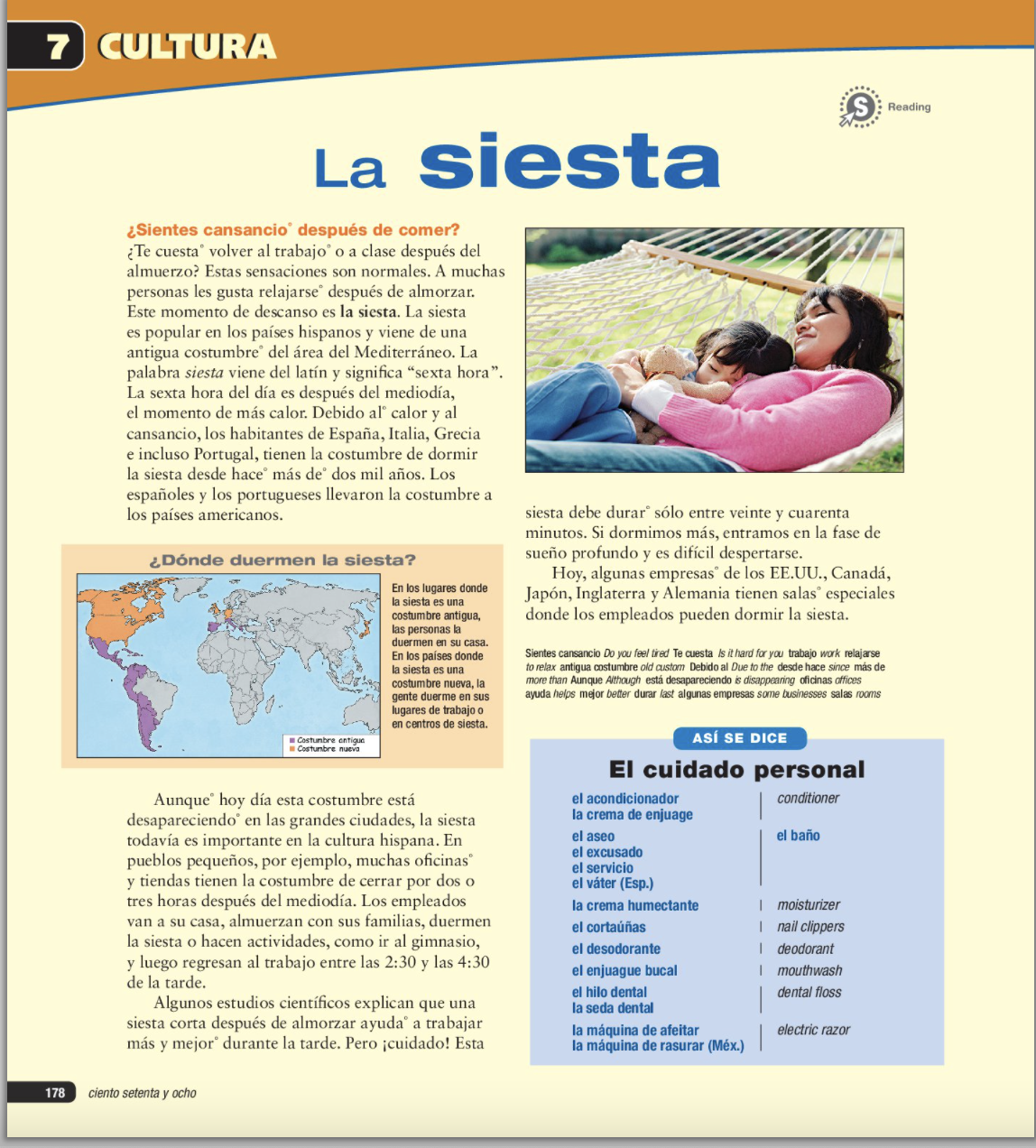
La Siesta – Vista Higher Learning (Lesson 7)

Encuesta Sobre El Verano Tus Preferencias – Professor Paloma Sugg
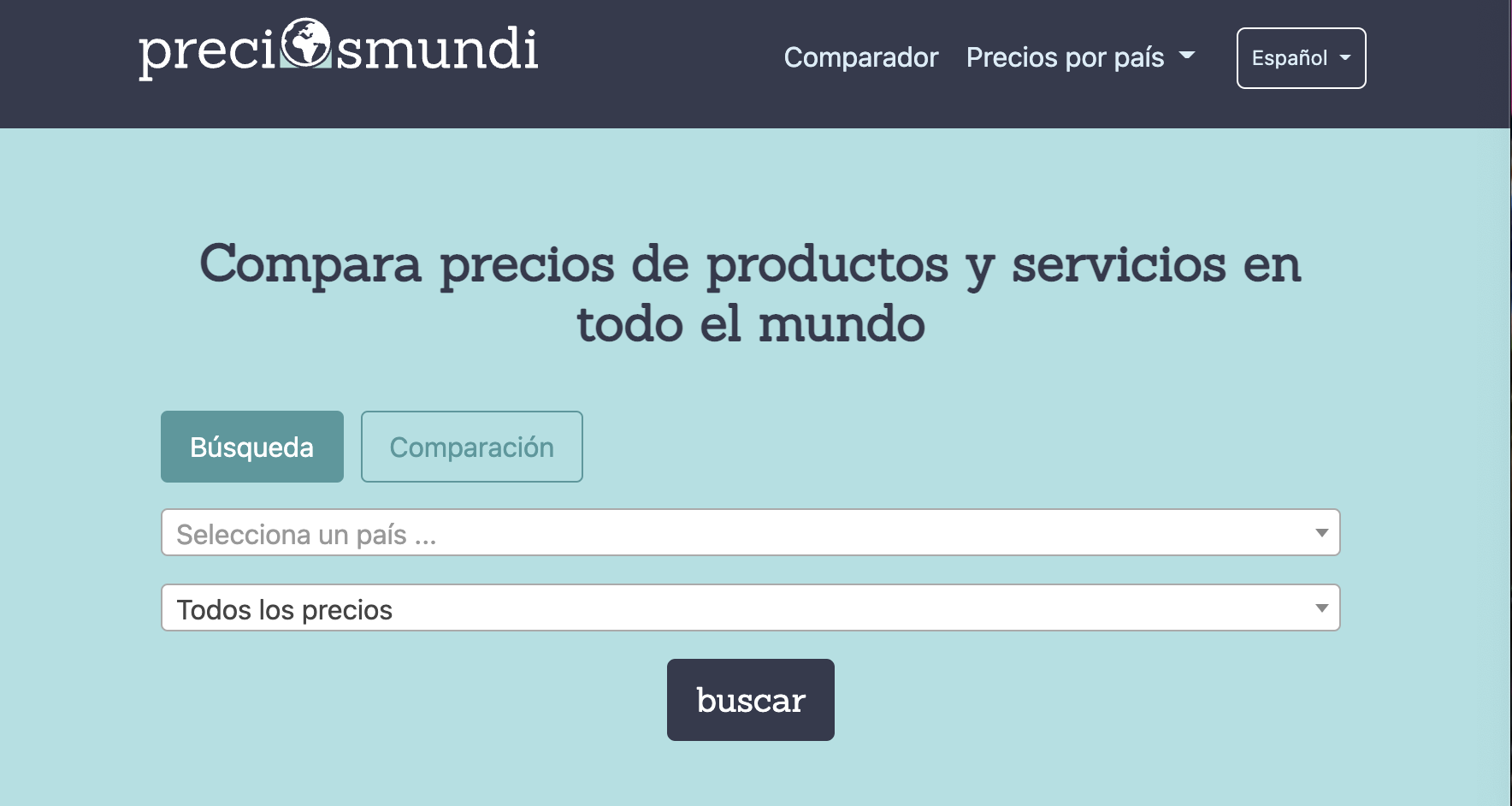
Precios Mundi – Spanish international price comparison and conversion site
Interpersonal Speaking
Reflection
When it comes to interpersonal speaking, TalkAbroad served as both an activity and a resource. In TalkAbroad, students are partnered with a native Spanish speaker with whom they have a 15 to 30 minute conversation with depending on the assignment. Additionally, we had an interview with Professor Sugg as part of the final exam for Spanish 102 and practiced immersive communication consistently in class, further improving our conversational skills. For TalkAbroad conversations, we had to complete two 15-minute conversations based off what the current lesson topic was. For the first, we had to focus on places and clothing in our conversation. I struggled with this first experience more than the one that followed because of nerves leading up to it. I over-prepared potential responses and questions rather than focusing on vocabulary and grammar when studying for the activity. This harmed me in the end as I had difficulty forming responses and comprehending what I was being asked. I was also anxious about communicating with someone who is fluent in the language as a beginner, and let that get to my head. For the next TalkAbroad, which was centered on daily routines and food, I studied relevant vocabulary and conjugations which would give me the ability to form better and more specific sentences. Though nerves still made the experience a difficult one, due to the change in how I prepared for the conversation it went much smoother than the previous attempt. I learned a lot about how to best prepare and learn conversation skills, and feel much more comfortable communicating in situations where I am not fluent in the language. In the conversation with my professor, though I also struggled with nerves – my main challenge when it comes to communicating in Spanish – I realized a way I can improve in conversation. I often get stuck on nervously stuttering out a short response in agreement to what my conversation partner said, rather than asking them further questions about it. By expanding my vocabulary and becoming more comfortable with conversations through practice, I will be able to maintain productive conversations in Spanish. On top of the final interview, class was always taught immersively, creating the opportunity for consistent interpersonal speaking upon participation in class. Outside of the classroom, I sometimes have conversations in Spanish with my friends who speak the language with their families at home. It helps me become more comfortable with wording things as I do them and conveying things in Spanish presently. Additionally, it gives me the opportunity to observe and familiarize myself with the way people who are fluent speak the language casually, as well as it being a friend who gives me a helping hand with proper grammar and phrasing.
Interpersonal Speaking Artifact
TalkAbroad – Daily Routines and Food: https://docs.google.com/presentation/d/1Dp-NUjXQYjF-lVNLN6IFvfadKw3cu-GvIWQ9dZp8cRo/edit?usp=sharing
Presentational Speaking
Reflection
For presentational speaking, the main activity which allowed us to practice and grow this skill were the Flipgrid assignments. On Flipgrid, students were tasked with creating minute-long videos discussing a given topic relevant to the lesson’s focus. For our first, we had to introduce ourselves to our classmates. I found myself not struggling nearly as much as I expected when preparing sentences to say which properly addressed the prompt. I was able to correctly piece together sentences to tell my peers about myself and where I am from, and I practiced saying them in order to pronounce them as accurately as possible. What presented itself to be more problematic was reciting them without checking my notes. Though I understood the words I was trying to say, the language barrier in my head made it difficult to correctly repeat them from memory. I was still thinking in English – an issue I have been practicing to solve since – which complicated presenting my prepared speech. I found myself forced to glance at my notes to make sure I said both the words and sentences in the correct order, causing me to not have a natural presentation. Other than finding strategies to improve my ability to think in Spanish when speaking the language, I have been practicing conversation with my Spanish-speaking friends to try and become more natural. This will allow me to present in the language without seeming so stiff and disjointed.
Presentational Speaking Artifact
Flipgrid – Introduction: https://docs.google.com/presentation/d/18Fwhwv3YcPLh6ATWWKCcviX2MsEMtGY0_igrWUnsDwg/edit?usp=sharing
Presentational Writing
Reflection
Throughout the semester, we wrote compositions in class to discuss certain topics relevant to the content of the lesson. These writing activities prepared us to write in a way which was informative to an audience and organized into sections which encouraged us to elaborate on the overall topic in greater detail. The first composition was an interview with a fellow student about recent fashion trends. I did poorly on my first attempt as I misinterpreted the topic, and worded my sentences poorly after finding myself forgetting many necessary words. I corrected this one by rereading the prompt and practicing my interpretive reading skills, ensuring I responded to what it was actually asking when submitting my corrections. For the second composition, which asked us to review a restaurant, I was better prepared based off of my previous mistakes. I familiarized myself with relevant vocabulary and ensured that I comprehended the prompt before writing the composition. I did significantly better than I did after my initial first attempt, however the issues remaining were mainly grammar mistakes, which rendered a few sentences incomprehensible. When I went about correcting the second composition, I went back and reviewed conjugations and word endings, reworking a few sentences to properly restate what I had tried to say at first. Other than a few small remaining mistakes, I successfully presented what was asked of me in the prompt through my written Spanish. Moving forward, more practice with tenses and proper endings for words, as well as consistently practicing vocabulary, will help me to improve my writing skills.
Presentational Writing Artifact
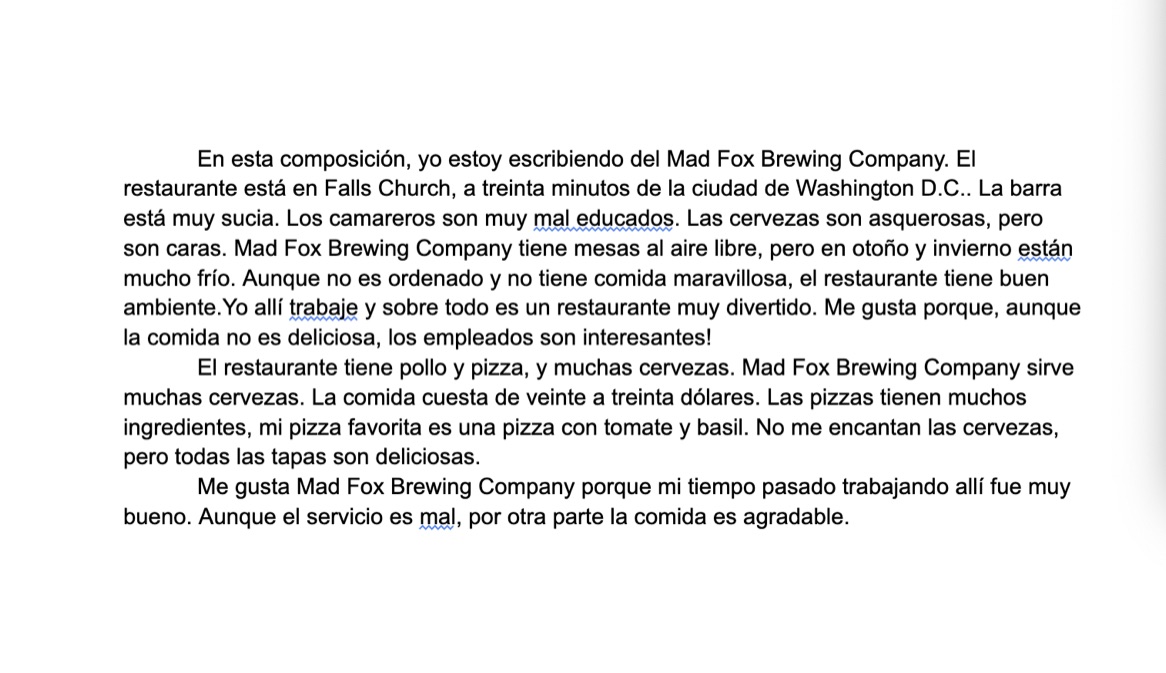
Composition 2 – Restaurant Review