Exploring Culture
The following assignment involved reading about writers that had an impact in Spanish-speaking countries and the historical significance of their work. After gaining an understanding of how different writers inspire readers in their country, it was important to apply that knowledge by answering questions about different literary influences in Latin America.
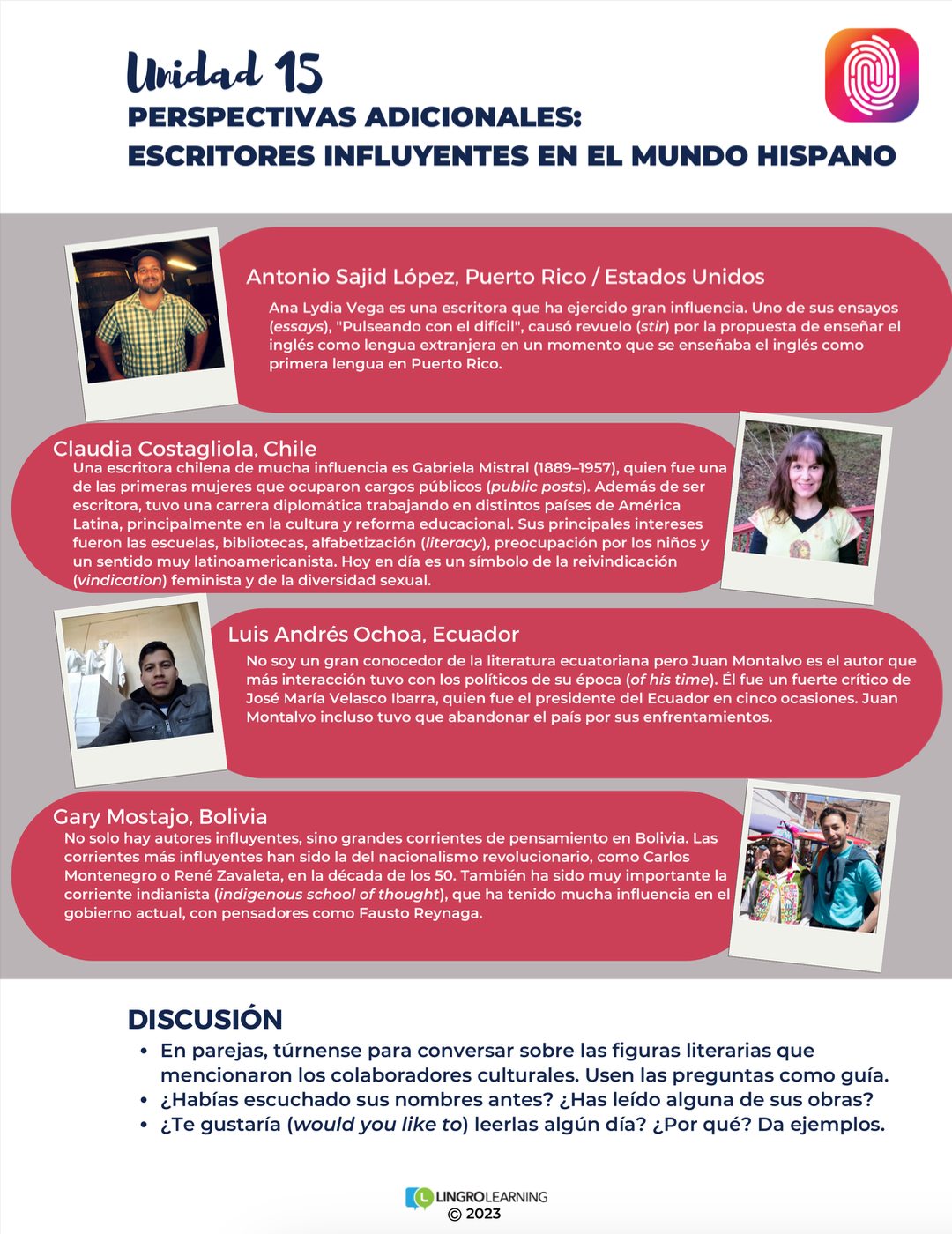
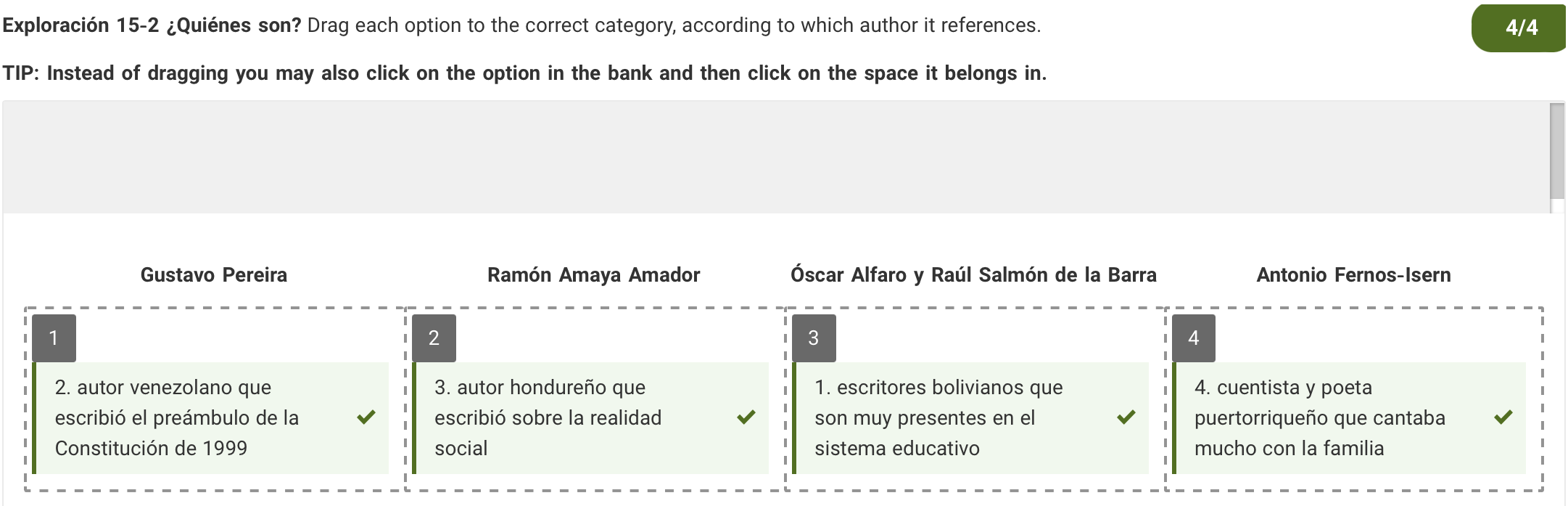
It was very interesting to learn about important literary influences in other countries. I felt that as a writer it was important to learn how writers through history have an impact on the people of their country. I had difficulties with this chapter due the the use of past tense, but I found it helpful to read dual language books that use a variety of tenses to tell a complete story.
Engaging in Communities
Engaging in both local and global communities is important to foster an appreciation of cultural identities and heritages. It also helps language learners to be exposed to other Spanish speakers from different cultures because each country has nuances in their language use that is influenced by historical and social circumstances. Within each culture there are also nuances the effect the way citizens communicate with each other. In chapter 16 I learned about the ways language can be misinterpreted within a culture when the conversation participants are not able to speak face to face in order to communicate their meaning.
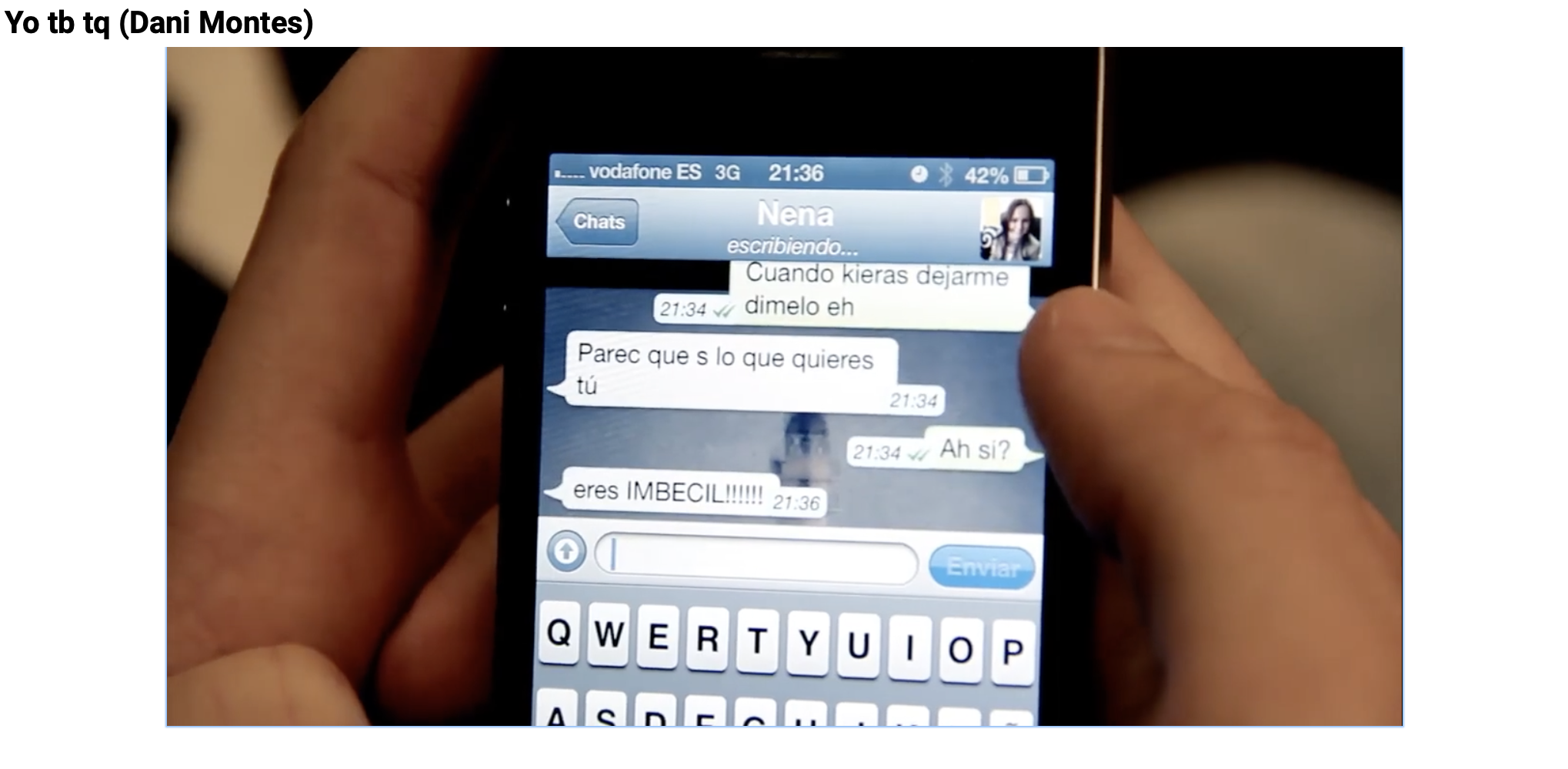
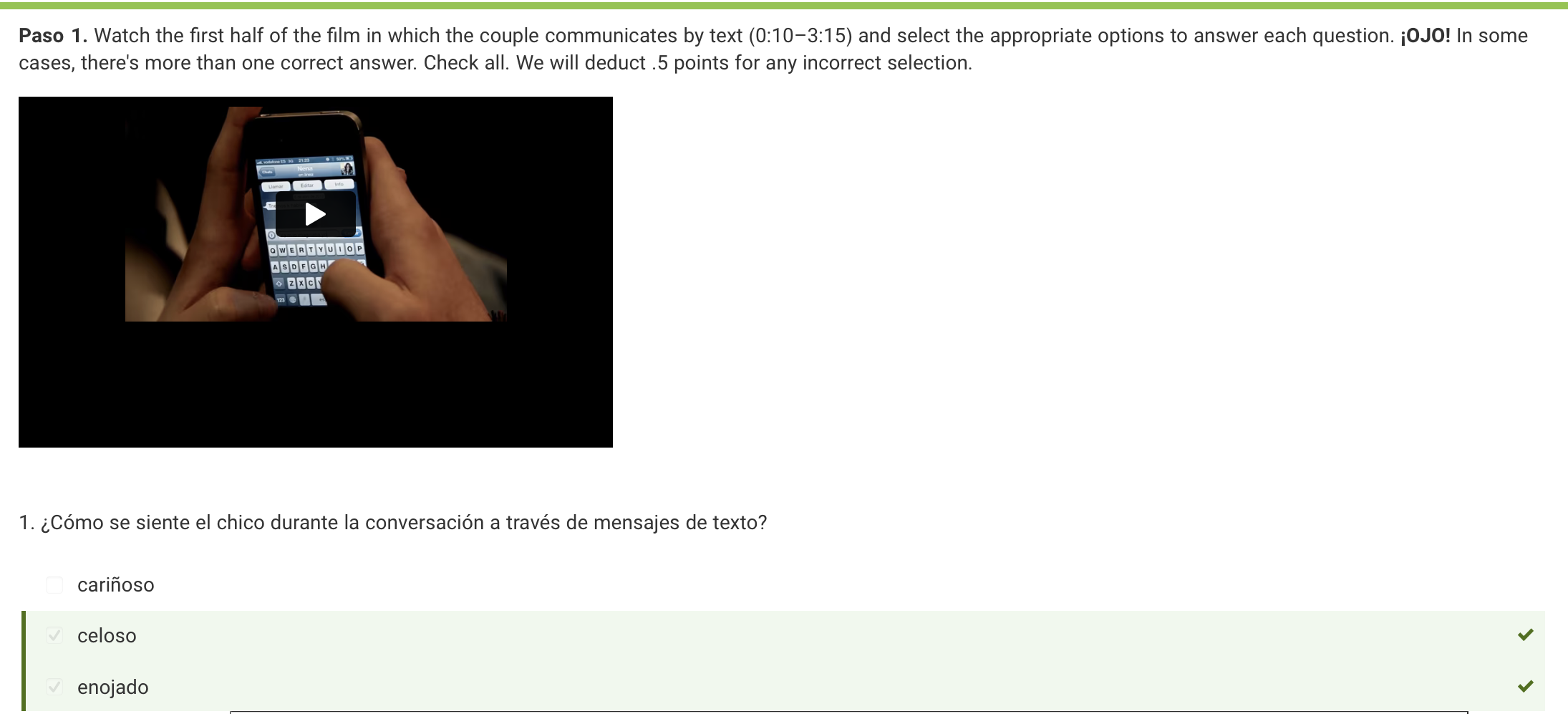
Speaking with local Spanish speakers can be difficult because America attracts a wide variety of immigrants and each each Spanish-speaking origin country has its own influence on the Spanish language, such as slang and jargon. Conversely, traveling to a Spanish speaking country allows you to prepare for one version of Spanish in an immersive environment. However, slang is unavoidable and chapter 16 addressed the use of slang in digital communications and how that can affect inter-personal relationships. Since I currently only communicate with other Spanish speakers in digital environments, it is important to know how slang and shorthand is used in Latin America to avoid miscommunication.
Interpersonal Communication
TalkAbroad gave me the opportunity to have a spontaneous conversation with a native Spanish speaker. TalkAbroad also gives users the opportunity to learn about other cultures outside of a textbook because each language partner brings their own interpretations the the conversation. It was a wonderful experience, I enjoyed my conversations with Adriana very much.
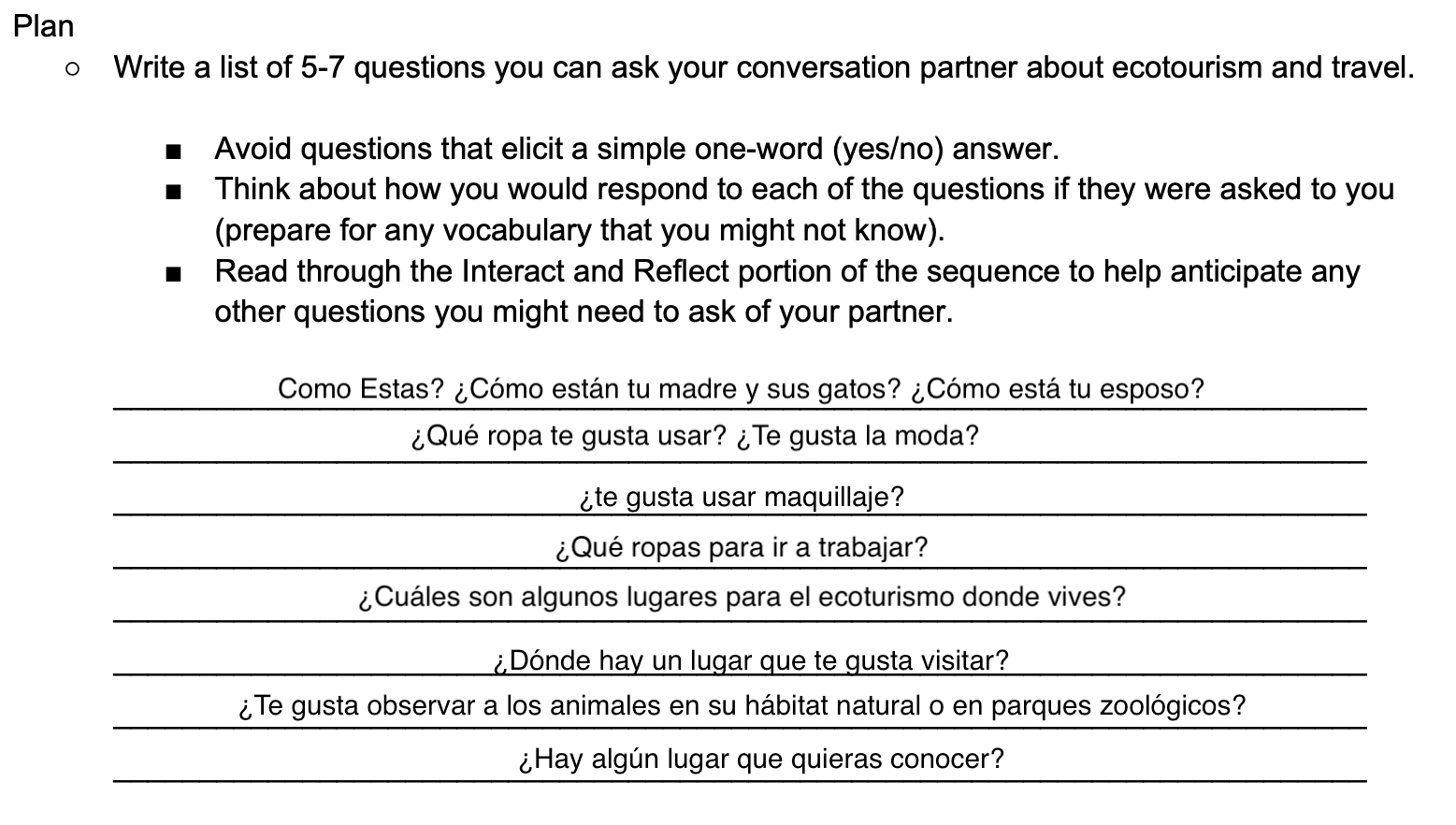
Adriana taught me the importance of using hand gestures to communicate clearer meaning. TalkAbroad was easier this semester because I was more confident with my Spanish and I felt more comfortable communicating with my partner. I also learned a lot about her country, Nicaragua, including activities tourists can do when visiting and artists that are historically significant for their culture. I felt that she was also able to learn a bit from me about life in America and it was good to participate in a reciprocal conversation.
Presentational Speaking
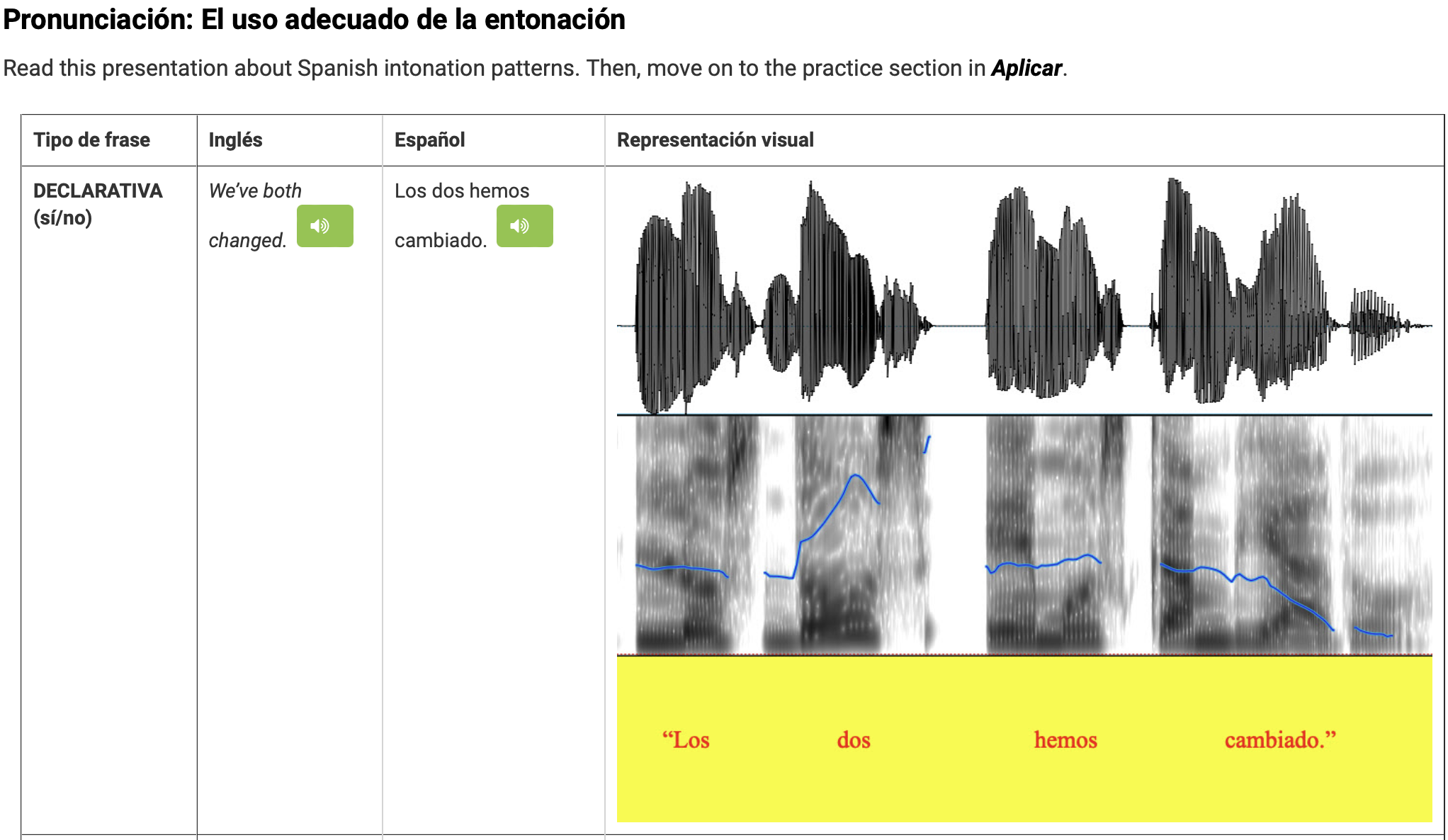
I learned how Spanish intonation patterns affect how your words are perceived. Just like in English, your tone and which words you emphasize can change the meaning of your sentence. This activity was helpful because was able to connect a visual to the audio and that helped me understand where I needed to modulate my voice during speech
This semester we did not record any of our Spanish projects as videos but we did need to speak frequently in class and were required to respond to impromptu questions. This was different than in previous classes because there was no opportunity to prepare sentences before class, but this technique resulted in more organic, although sometimes rocky, communication. This learning style made me a more active listener and I found that by analyzing lip movement and facial expressions I was able to better understand the other speaker. By actively listening I was able to gain a better understanding of how to form sentences and use the many different tenses we learned during this semester. I was able to work on my biggest weakness, which is gender and number agreement when speaking Spanish, as well as my speech pattern.
Presentational Writing
In chapter 11 we learned about fashion and how to talk about style preferences. Our project for that chapter consisted of reviewing a style quiz in Spanish for another person and recommending outfits and accessories for them.
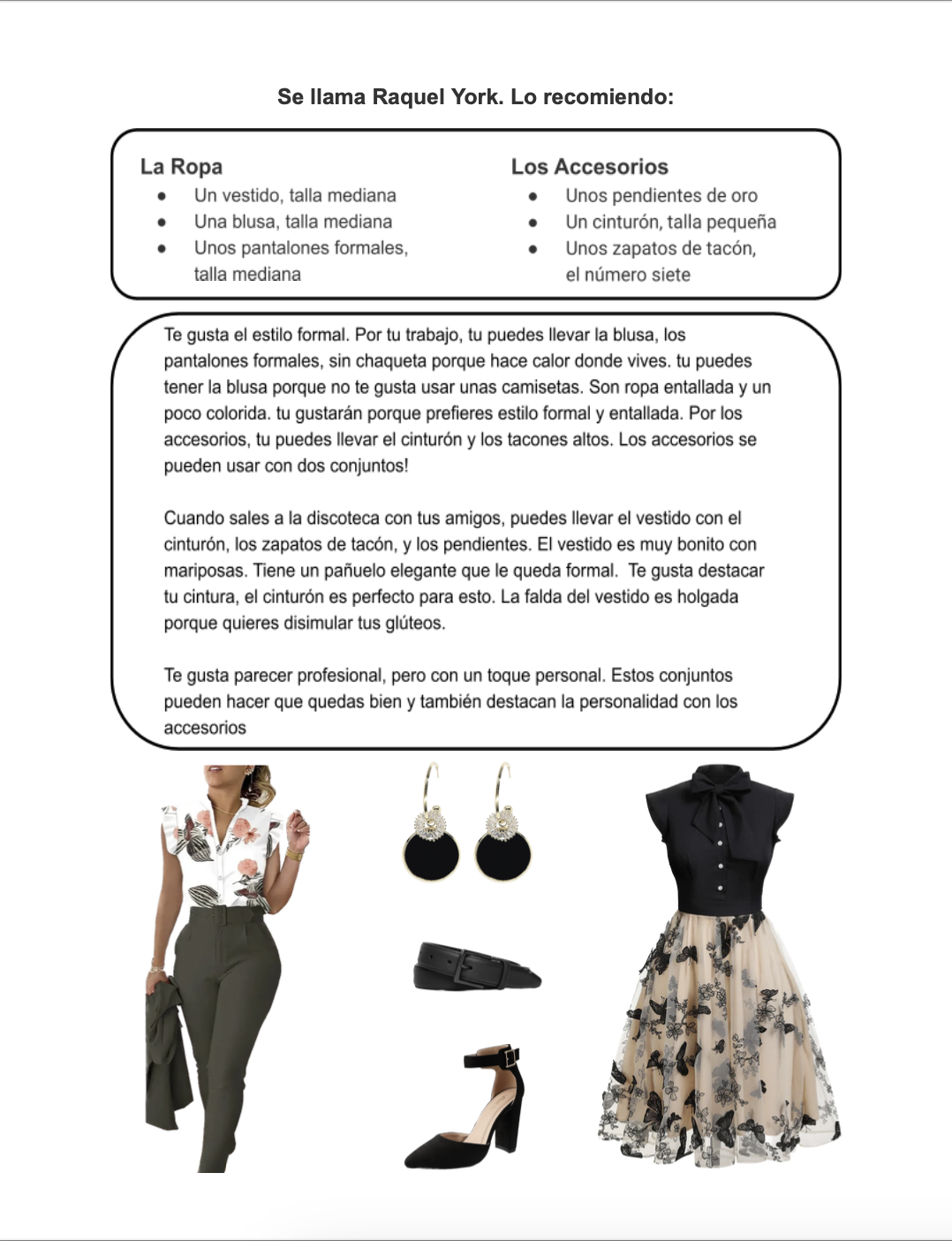
I chose someone who had similar style preferences as myself so that I would have the opportunity to focus on language I would use again. This project gave me the ability to talk about and understand style preferences and because I chose someone with a similar style I can now confidently talk about my own personal style with ease. However, if I had the opportunity again I would pick someone with different style preferences so that I could diversify my vocabulary.
Interpretive Listening
I used resources recommended by the Language Learning Center, such as the Fabled Cottage videos, to get a better understanding of preterite and past imperfect tenses. This video in particular was helpful for understanding how to use the imperfect tense.
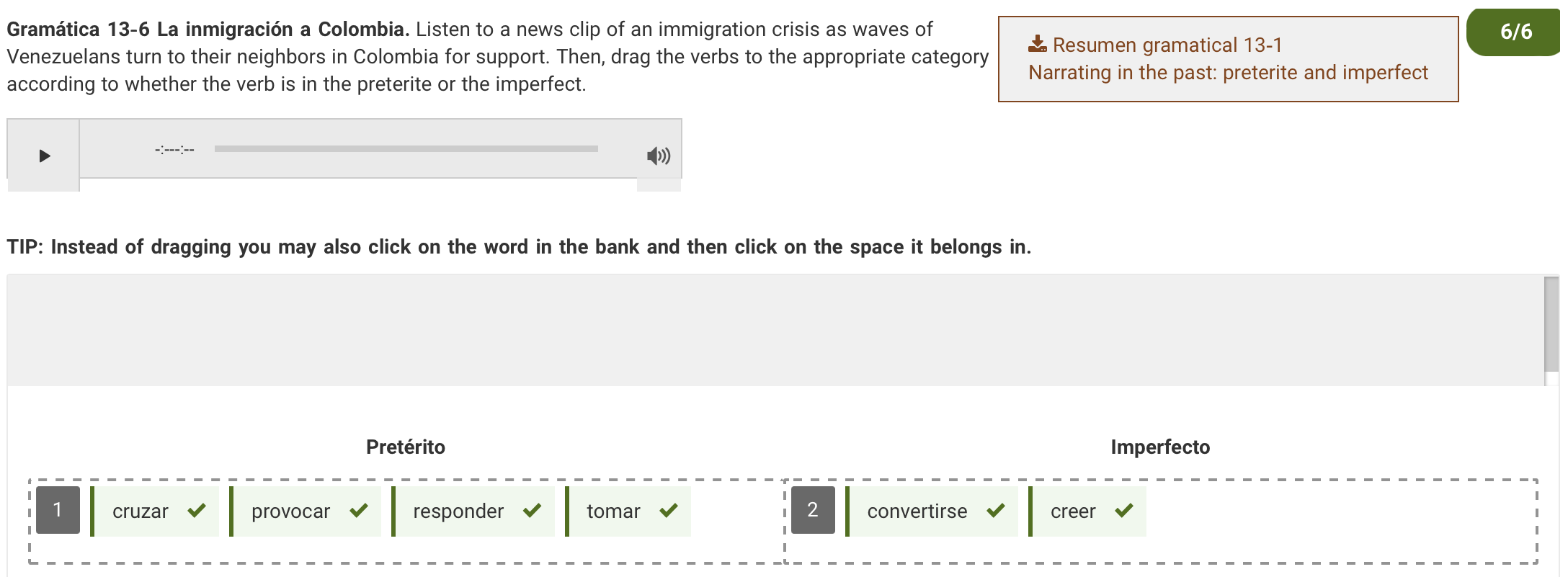
I struggled with when to use the correct past tense and it is still very challenging to me, but with the help of resources like this I was able to gain a better understanding of when to use which tense. I love sharing these videos with my daughter, who is also learning Spanish, it gives us a way to connect over the language and she loves the characters. It also helped me better understand the way these tenses sounded when used so I was able to do better on my grammar application, as seen below.
Interpretive Reading
We had many interpretive communication activities during the course of the semester, but the story El Eclipse was a great example of why it is important to remember that there will always be different interpretations of the same event.
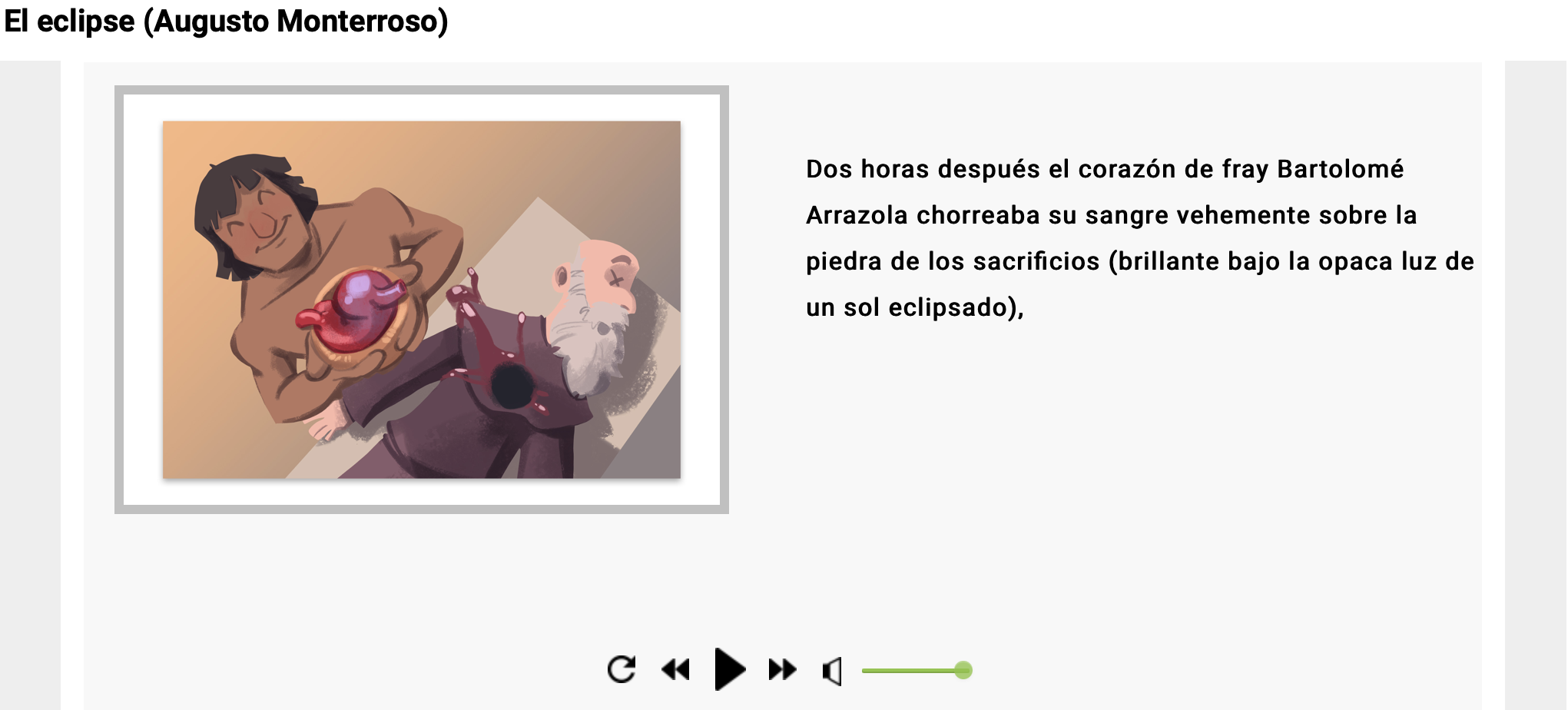
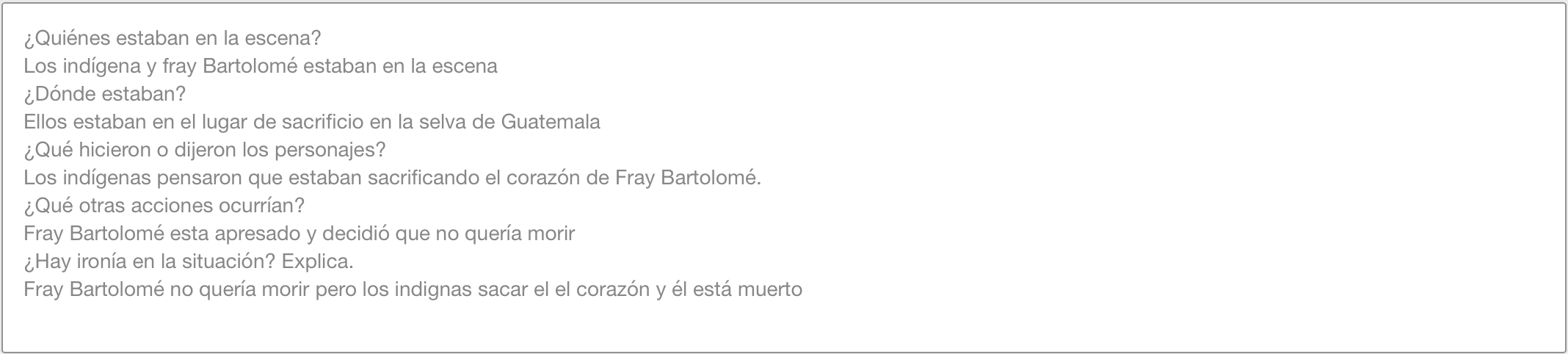
This project gave us the opportunity to analyze a piece of literature and see how certain events are perceived by different characters. We also analyzed the literary elements of the story. I found this particularly interesting because I am a writer and enjoy literary analysis. I felt that it was important for me to learn how to speak about things I’m interested in and hopefully I can incorporate the knowledge I learned from this chapter into my professional life.