Helping Others: Takeaway #5
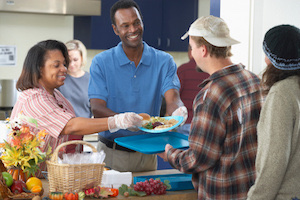
Many people were raised to be charitable around the holidays. Every year we are encouraged to look around and be grateful for what we have and give what we can to those who are less fortunate. Although this assignment was scheduled close to the holidays it encourages us to be generous year-round. For this assignment, we were challenged too to do one act of good for a stranger or someone we knew and to reflect on why we decided to help in the way and how it made us feel. From that assignment, I learned that it is easier to perform small acts of kindness on a daily basis than I had imagined. I usually made the excuse that I should get myself together before I commit to helping others, but once that excuse was gone, I was shocked that such little effort on my part made such a massive difference in people’s lives.
I’ve always had a strong desire to do more because my mother modeled compatibility and emphasized giving back to the community, but there was never a personal investment. Having the opportunity to challenge myself to give back as an adult has had a large impact. Beyond wanting to do nice things on a personal level, doing good deeds has an impact on a macro level as well. Taking the time to do a kind thing for someone, especially someone who is in an out-group has the potential to decrease proximity and open the door to more substantial interactions. The more meaningful interactions people of different groups have with each other the fewer prejudiced ideas are held.
Love is expressed differently: Takeaway #4
In this assignment, students took a love questionnaire and compared their results to the average population. Then students discussed their results and the perceived accuracy. I found the results did indeed reflect my beliefs. During the mania portion of the quiz. I recognized that some of the questions referred to unhealthy levels of codependency. It is essential to maintain a sense of individualism within a relationship and having a good level of independence.
This questionnaire was a good opportunity to reflect on what relationships looked like when I was younger and compare it to the much healthier relationship I have now. I can even see a maturation of love within the last 5 years of my current relationship and how I have become more secure. I am also more easily able to point out some areas where I am still insecure. I can point out the missed signals on my part and I have a chance to reflect on some of the root causes of my insecurities and I can plan better reactions if those feelings start to resurface again.

Discrimination and Racism: Takeaway #3
This topic is very personal to me because as a black female I’ve been called “that” racial slur and when it happened, that situation caused a visceral reaction. the feelings of disempowerment anger and sadness were the most memorable. So, the notion that some people can throw a racial slur around and it is “simply trying to inflict pain” is baffling to me. I never understood why such grace was granted by other members of the in-group. To someone who is a victim of racism, it is easy to spot, and I am often tempted to label anyone who condones that behavior as racist as well, but I know that isn’t entirely fair. Most people truly don’t believe they are racist so the amount of cognitive dissonance that some people must feel is probably greatly uncomfortable. I can only imagine it has them doing summersaults trying to rationalize their behavior. They actively choose not to think about how their actions affect others and when directly confronted with it in order to keep from feeling guilty they gaslight the person trying to start a dialog. Instead of both sides trying to understand, they Assert that there is no problem and begin to complain about political correctness. I’ve had these types of conversations many times with individuals online and in-person and I always amaze me.
None of the concepts iv learned in this chapter were new to me, but I have learned the scientific terms for these behaviors. what frustrates me the most in situations like this is the tendency for actions of the in-group to be seen as less bad and sometimes even justified versus how those same actions are perceived a much worse by the out-group because this prevents accountability in the in-group and increases false equivalencies when comparing their actions to minorities. What gives me hope is something I learned in I/ O psychology. with proper sensitivity training reports of unfair treatment in the workplace were greatly reduced, and in general, the more diverse a company was the fewer reports were made.