Interpretive, Interpersonal, and Presentational Modes of Communication
Introduction
As a Latina, taking Spanish 1 to begin learning and understanding the language was very important to me. Profesora Padilla used the reverse classroom method and the LingroLearning Textbook to help me achieve this goal. At the start of the class, I only had a vague understanding of what some words meant, but little knowledge on how to speak. I believe that this method of teaching helped me more than traditional teaching styles used in high school because the textbook was very engaging and required a lot more interaction to complete assignments. It gave me the opportunity to watch comprehensive videos, listen to phrases and sentences being used, read the lessons and record myself. I have grown in all areas of the course to include speaking, reading and understanding when spoken to in Spanish. I experienced the most difficulty with conversing because I don’t have as much time to formulate my thoughts as I would when writing or reading.
Exploring Culture
In each Chapter of the LingroLearning Textbook, I had to read about culture in Spanish-speaking countries. Some chapters had profiles of people from designated countries that I would read before answering questions or writing a response to.
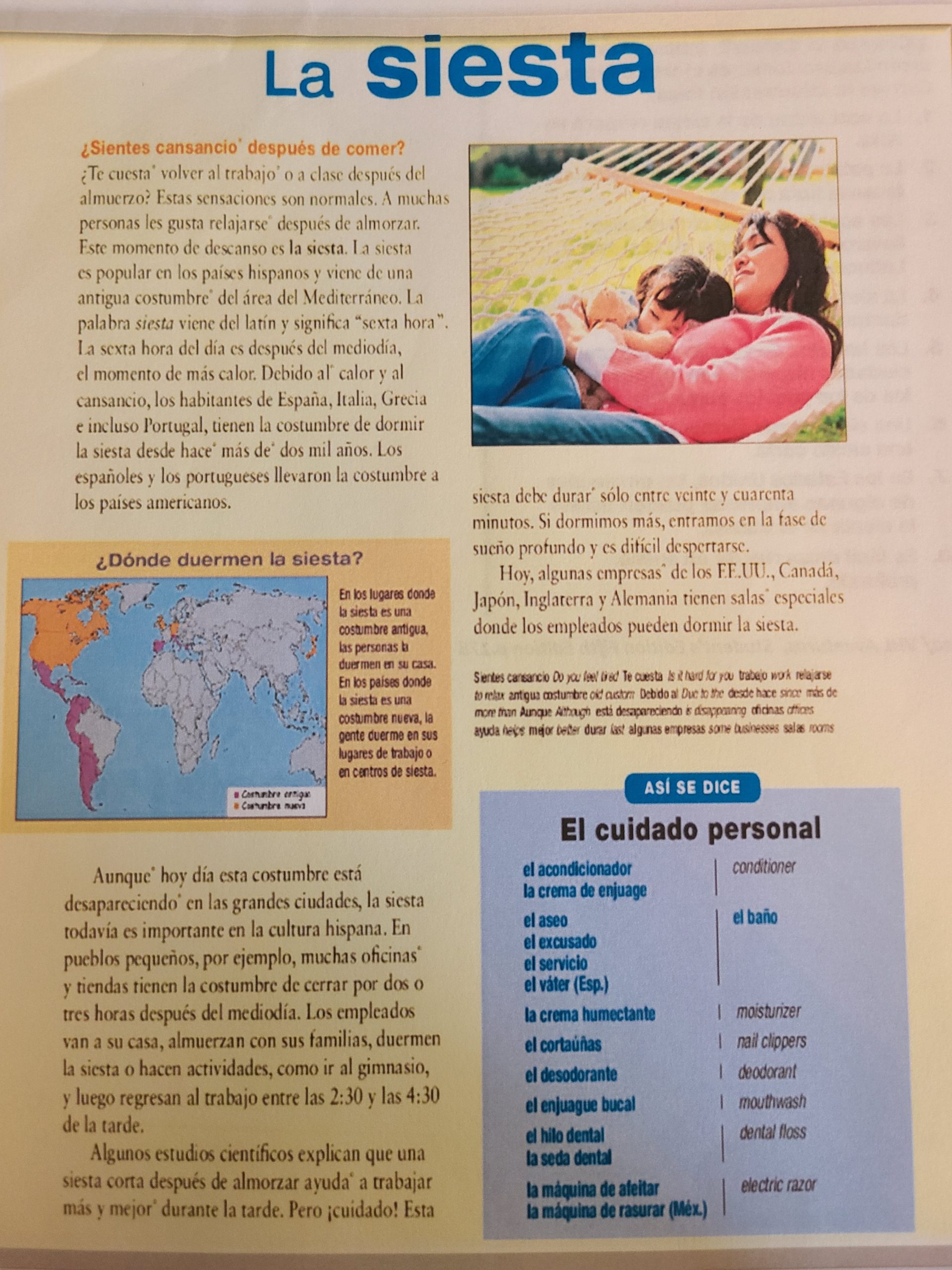
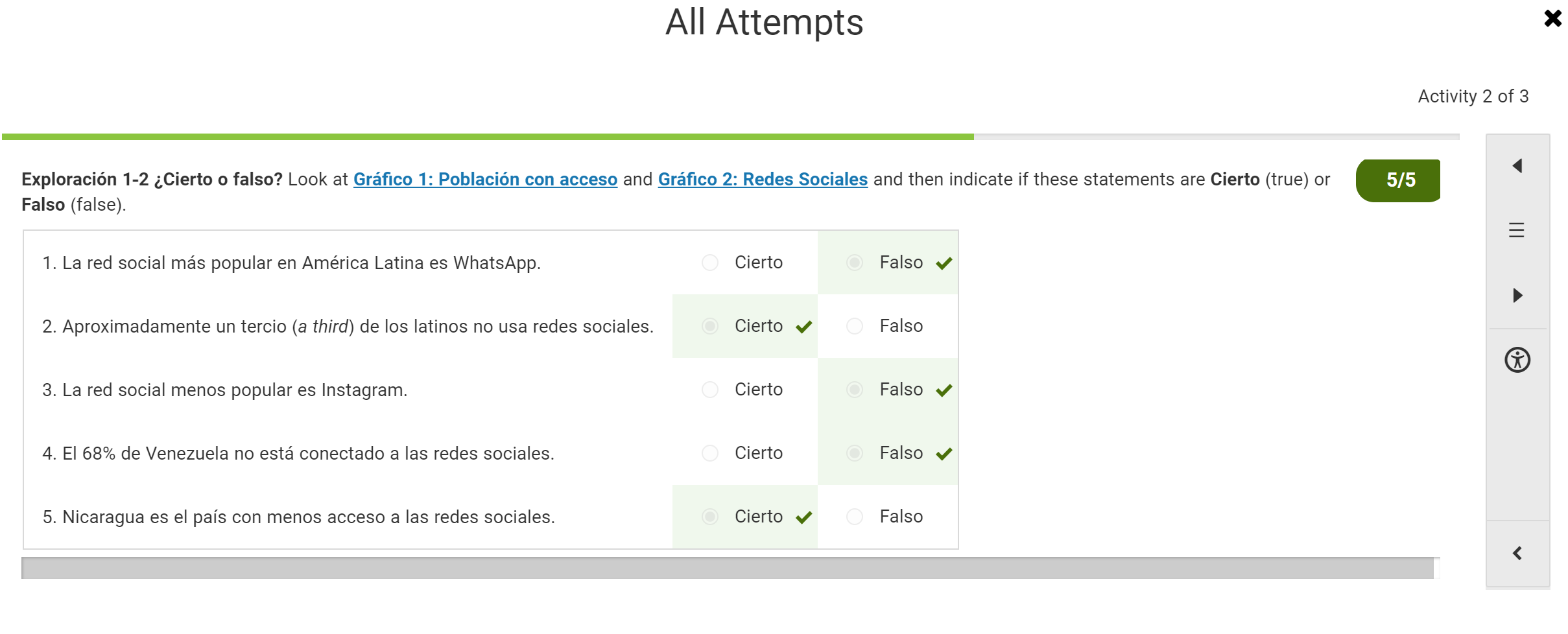
I think these activities really helped me grasp the cultural differences of these countries compared the the US. I did not know there were as many differences as there are because I grew up in a largely Hispanic populated part of the US and the lifestyle did not seem that different. I was guided in researching different topics like what countries still have siestas or use usted/tu. These activities opened my eyes to what people experience and live like in other countries. A stereotype that I learned was not true through some of these cultura lessons was that not all Spanish speaking countries use formal greetings. I previously believed that Spanish-speaking countries valued respecting their elders and more distinguished members of society in every case, but was surprised to learn that some countries use the informal “tu” in every situation. I also did not know that some countries do not have access to the internet in their homes and people have to go to public spaces such as the park to use the internet. I learned a lot of interesting facts about culture through this course.
Engaging in Communities
It is so important to seek knowledge that goes beyond just where you call home. With a better understanding of how other countries, or even other cultures that are practiced nearby, live and experience things, we are able to understand people on deeper, more meaningful levels. There is value in engaging in your community because if you want to change some aspects of life, you have to first understand it well. The same goes for engaging in the global community. We can adopt ways of doing things that other countries do if they could benefit us, as well as share improvements with others.
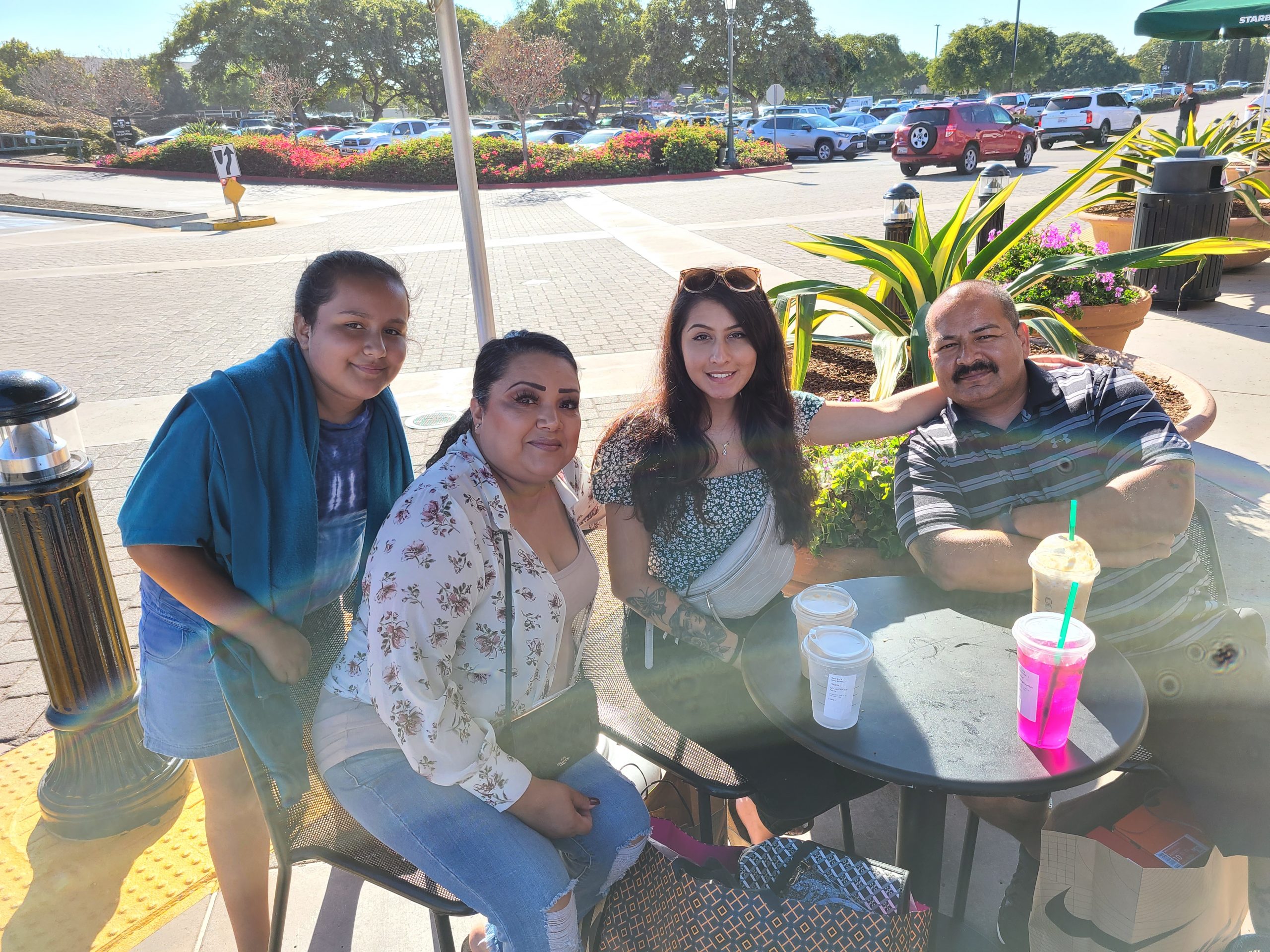
I grew up in a predominantly Hispanic community in California and most people knew how to speak Spanish. My grandmother did not teach me Spanish because she moved from Bolivia to the US to pursue a better life for herself and her family. Because of this, I was not raised with many experiences that Hispanic families have such as having a quinenera or just speaking Spanish in the house. I did, however, get to take part in making tamales as a family during the holidays, learning how to cook traditional dishes, and attending my friends’ quinceneras. I value learning Spanish now to get in touch with my culture and hope to some day visit Mexico and Bolivia to visit family members.
Interpersonal Communication
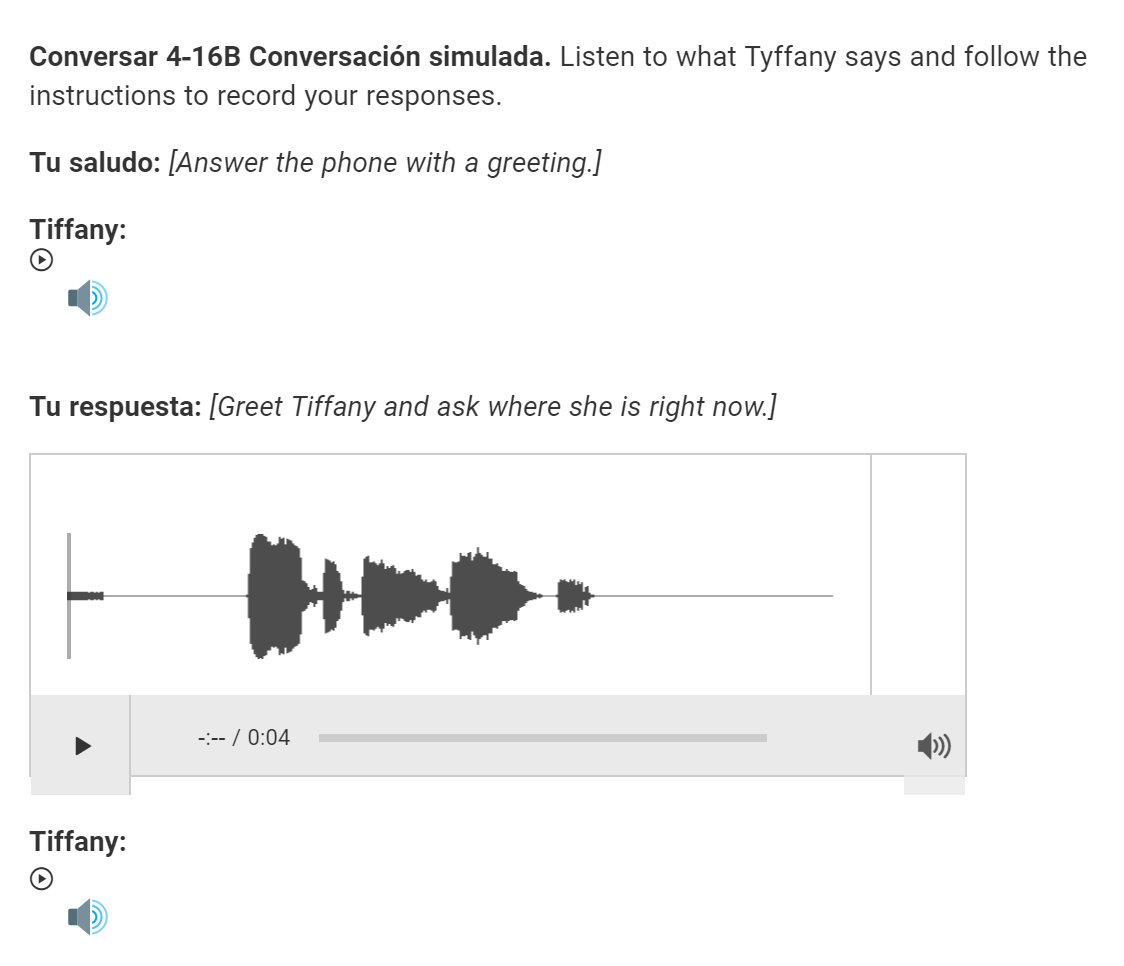
In the LingroLearning Textbook,I had to do record myself for some assignments so Profesora Padilla could evaluate my pronunciation. In these activities, there would be a dialog that I had to respond to and in most cases, I just had to respond to a greeting, question and say goodbye. Another interpersonal activity that I took part in was in class when I would have to have a conversation with a classmate.
I would call my sister, who is fluent in Spanish, and speak a little bit here and there as well as text my friends in Spanish when I learned new words and phrases. I am commonly mistaken as someone who knows how to speak Spanish fluently at little Mexican tiendas that i shop at, but now I can communicate a little bit when I go. I’ve grown through the conversation project and various activities by improving my conversational skills. My issue is that I take too long to understand what is being asked of me and to find the answer I want to give in time for a normal conversation to flow. I don’t struggle with pronunciation, but rather the forming sentences and using the words in the right order and with the right tense. I would like to do more conversation-based learning next time I have a Spanish class and find a partner who is as dedicated to learning the language as I am.
Presentational Speaking
In this course, I had to do a few video projects. One of these was showing some of my favorite places on campus and describing them and the activities that can be done there.
For my video, I chose the school gym, library and the bookstore. I described each building and stated what I do in each, as well as gave a general idea of their location. I was good at deciding what I wanted to say for each because I was very familiar with these locations, however I would have been more specific about describing the activities that can be done next time.
Presentational Writing
I had to do a few presentational writing pieces when I wrote compositions for some projects in class. These were turned in and I made corrections to present them here.
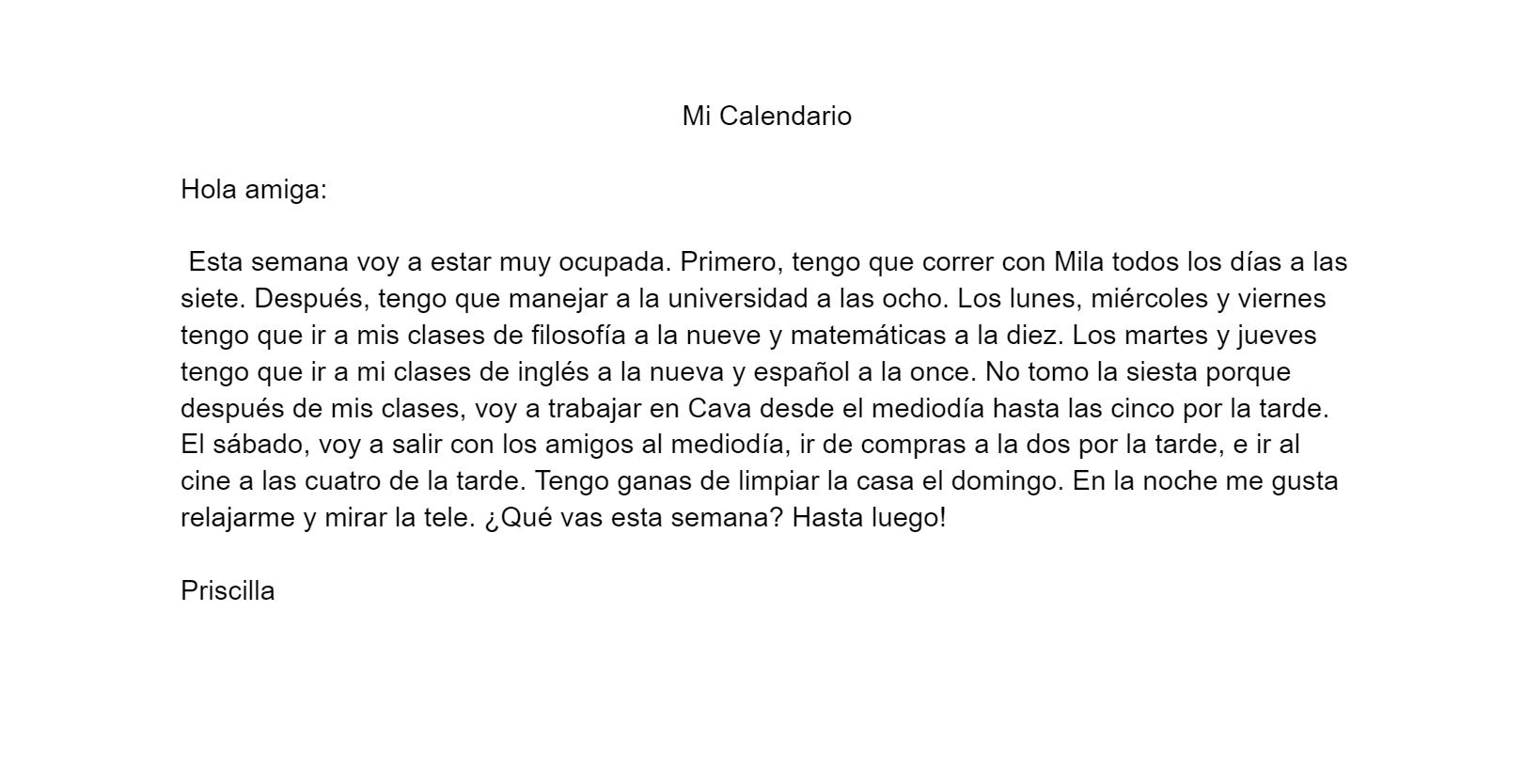
One composition was introducing myself and the other was explaining my schedule for a typical week. I was able to use a lot of the vocabulary that I learned in class for both of these writing pieces and I learned a bit about proper usage of certain words. I struggled with speaking in first person and remembering punctuation since it is different in Spanish. Writing has become easier with practice and I feel more comfortable with it now. I am more aware of where punctuation goes, for example the accent marks. I will keep practicing and expect to get better as I continue to speak it since I can sound words out and write them down.
Interpretive Listening
In some sections of the lessons that we did in class, we would have to watch a video and listen for answers that would be asked afterwards. In the homework, I also had to listen to various words or phrases and answer questions such as who the subject is or if a word was masculine or feminine. Outside of the classroom, I frequently listen to songs in Spanish and practice my pronunciation by singing along in my car.
This semester, I listened to my classmates’ video presentations about their favorite places on campus. I did an interview with a classmate and listened to their answers to questions that I asked them. I listened to recordings to answer questions after during the homework. I was not challenged in understanding what was being said but sometimes it was hard to figure out specifics if the speaker was talking fast. The biggest thing that I took away from this part of class was getting accustomed to what it is like to listen to a fluent Spanish-speaker and comprehend it in real time. Anyone can practice talking slowly for you, but I find it best to learn at the speed that the language will actually be used.

Interpretive Reading
Some interpretive communication activities that we have done in class are reading passages in the textbook and answering questions. We also read articles like the one on the Siesta and discussed what we got from them after.
As I have stated above, I don’t have much of an issue with comprehending reading or listening to Spanish. The only things that are unclear in readings are words that I am unfamiliar with, but I can usually figure out what the words means by the context of the sentence or just by looking it up. I found some of the readings interesting and informative about the culture of Spanish-speaking countries. I have grown more in touch with my culture through some of these assignments and hope to be able to experience some of what I read about for myself.