INTERDISCIPLINARY THEORY AND CONCEPTS ( IDS 300W )
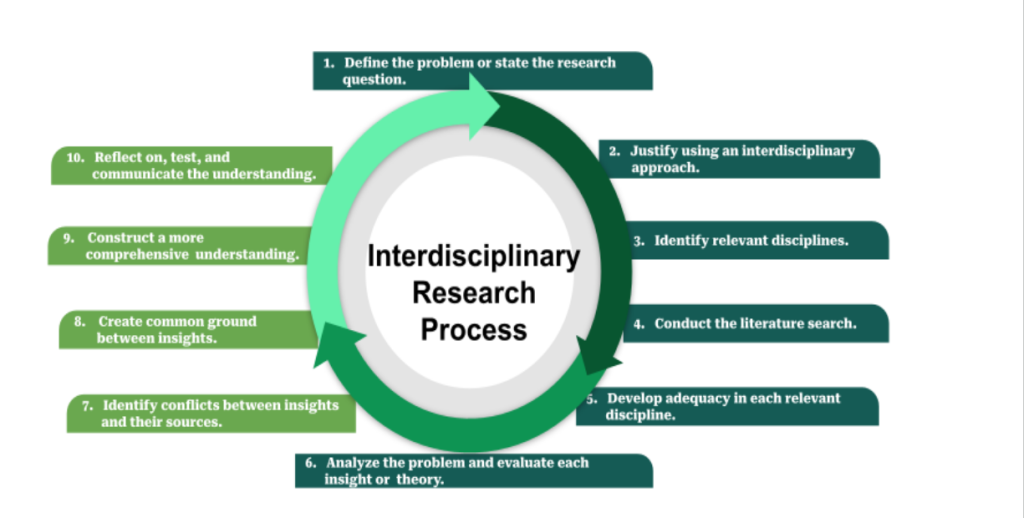
This course has taught me the importance of an interdisciplinary approach when developing solutions. It was my first exposure to interdisciplinary learning, and I quickly came to understand its value in research and real-world problem-solving. Through this course, I further developed my research and writing skills, both of which are highly valuable and essential across many professions, especially in cybersecurity and the broader IT field.
Importance of Interdisciplinary Studies
In order to solve a complex problem, insights from a single discipline are insufficient as it just focuses on perspectives and insights from a specific discipline. In real world, problems are complex and need insights from more than two disciplines. For example, a problem like why people fall victims for cyber attacks, might requires insights from criminology, psychology, economy, sociology, ethics, and law. Thus, the interdisciplinary approach helps to create more comprehensive understandings of complex problems and issues by integrating insights from multiple disciplines.
How Interdisciplinary Studies Strengthen Cybersecurity Solutions
Cybersecurity is a broad field that often intersects with multiple disciplines such as technology, ethics, society, and economics. Because of this, focusing on a single perspective is not sufficient when addressing cybersecurity challenges, which are often complex in nature. Instead, it is important to draw insights from different fields and integrate them when working toward effective solutions.
My Practical Implementation of Interdisciplinary Studies
In this course, I identified and analyzed insights from multiple disciplines to explore effective solutions to persistent phishing attacks. More specifically, my research question was: “Under what conditions do cybersecurity awareness and training programs effectively reduce users’ susceptibility to phishing attacks?”
Using an interdisciplinary approach, I identified and outlined three specific conditions or criteria under which cybersecurity training and awareness programs are more effective in reducing users’ susceptibility to phishing attacks:
- Training must explicitly address the management of human psychological states that influence their decision-making during critical situations
- Training must incorporate Technical and Data-Driven Cues
- Training must be adaptive, realistic, and experimental learning
Finally, I concluded that user training and awareness programs are essential and play a significant role in reducing phishing attacks. However, their effectiveness depends on a variety of factors, including human behavior, psychological state, personality traits, and technical knowledge. By incorporating these factors into the design and implementation of training programs, organizations can greatly enhance their effectiveness, equipping users with the technical skills and awareness needed to recognize and avoid phishing attempts.
Work Sample
IDS Term Paper