Interpretive, Interpersonal, and Presentational Modes of Communication
Exploring Culture
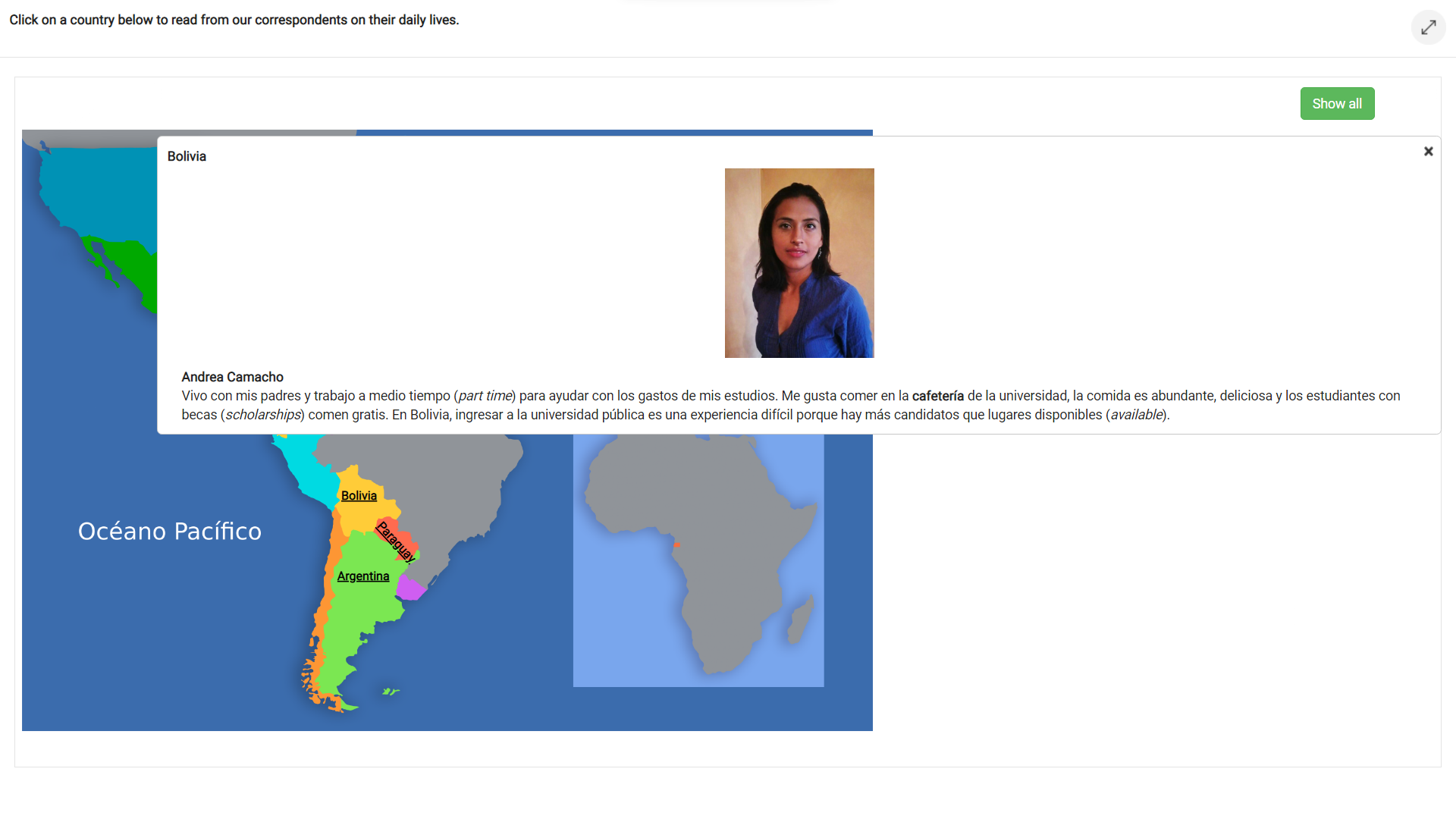
In Lingro, both assignments in class and homework online showed me many opportunities to learn about Hispanic culture. It helped me understand some of the contexts of how Spanish is used in real life as well as how people in these Hispanic countries experience their lives.
These practices helped me understand Hispanic culture by helping me learn about how things that may be things that are always done here in America, may be different or the same in Hispanic countries. This challenged my worldview by pushing me to ask questions and research Spanish concepts and countries. I didn’t have misconceptions about Hispanic culture only because I didn’t know much about it. But one of the things that stuck out to me was how hard it was to find out how life was on college campuses in Spanish countries. Also, siesta, which is a set time when everyone gets to relax to take a nap. Here in America, naps are taken whenever that certain person has time.
Engaging in Communities
Engaging with communities both immediate and global is important because it can broaden your perspective on people’s lives. It can be a great way to deepen or create relationships with new people. Engaging with my class community as well as my immediate community helped me gain insight into the many ways to speak Spanish.
I couldn’t upload a video but for the interview project, I interviewed my boyfriend. He rarely speaks Spanish around me but interviewing him in Spanish brought me insight into the way he speaks Spanish since he’s Puerto Rican. My participation in this project as well as my participation in class has helped me expand my Spanish vocabulary.

Interpersonal Communication
In class, we had many opportunities to speak to each other in Spanish. We would talk and compare answers as a class and in pairs. Most of the time we would start by answering questions in Spanish ourselves and then asking our classmates about what they said.
Discussion boards would also be a large part of the class. We would do a lot of comments on each other’s projects. I think this helped me with Spanish because it caused me to think outside of the box and made me a more attentive listener. I would have to pay attention and read and listen deeply to my classmates in order to clearly respond to them. I think I have grown with each activity by learning things from my classmates. I have taken note of the Spanish words they used in their posts or projects, expanding my understanding and vocabulary.
Presentational Speaking
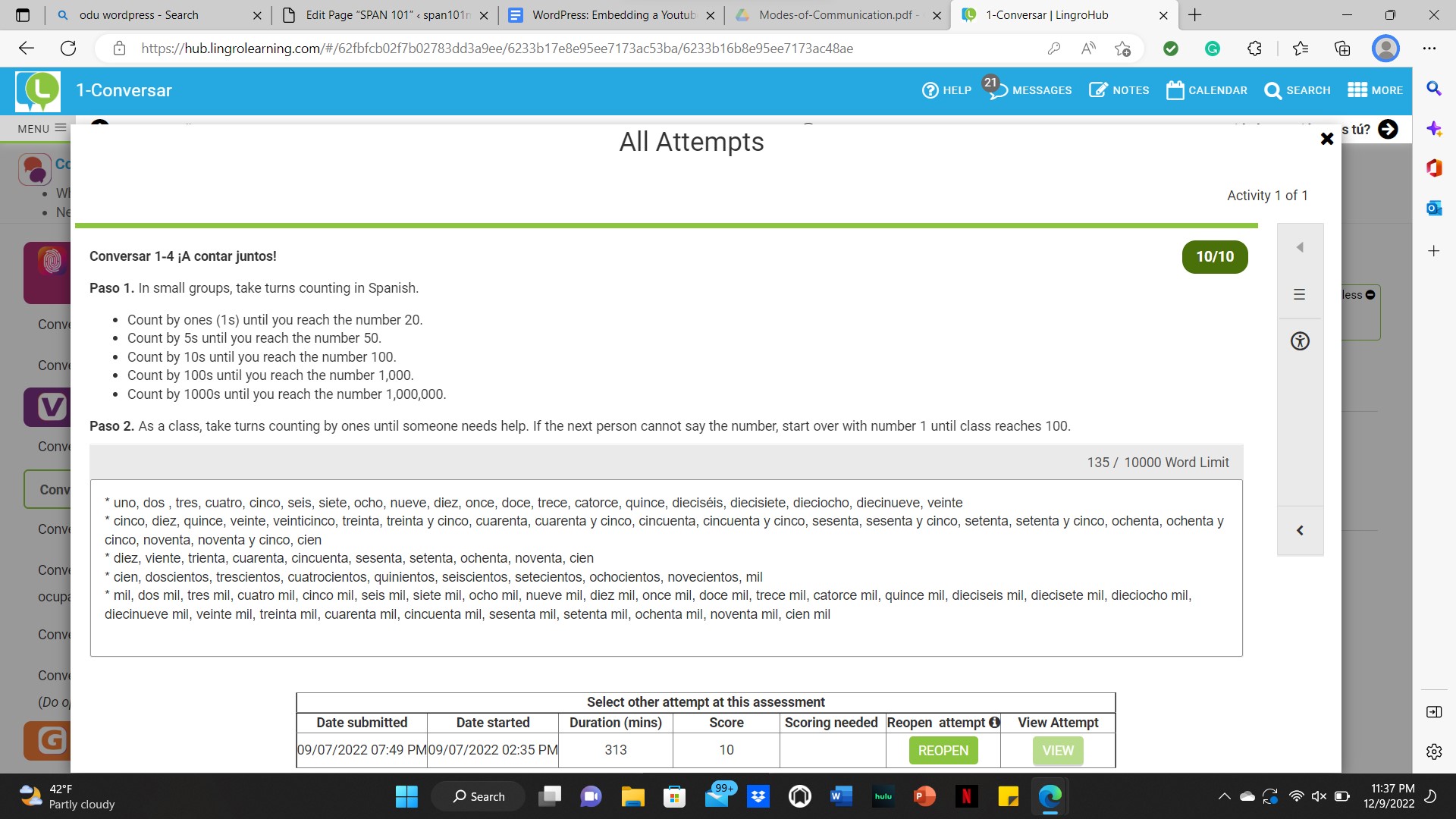
Interviews are the most prominent speaking activities in this class. We have has assignments where the teacher usually interviews us and we had a project where we were the interviewer. Also in class, our teacher would ask each of us questions in Spanish and we would answer them.
I think that speaking is one of my strong suits in Spanish. My teacher says that my Spanish is clear and that I speak very well. I have a problem with my verbs and using the same words, however. I overcome these problems by writing out what to say first and I think that next time I will study the harder verbs I struggle with.
Presentational Writing
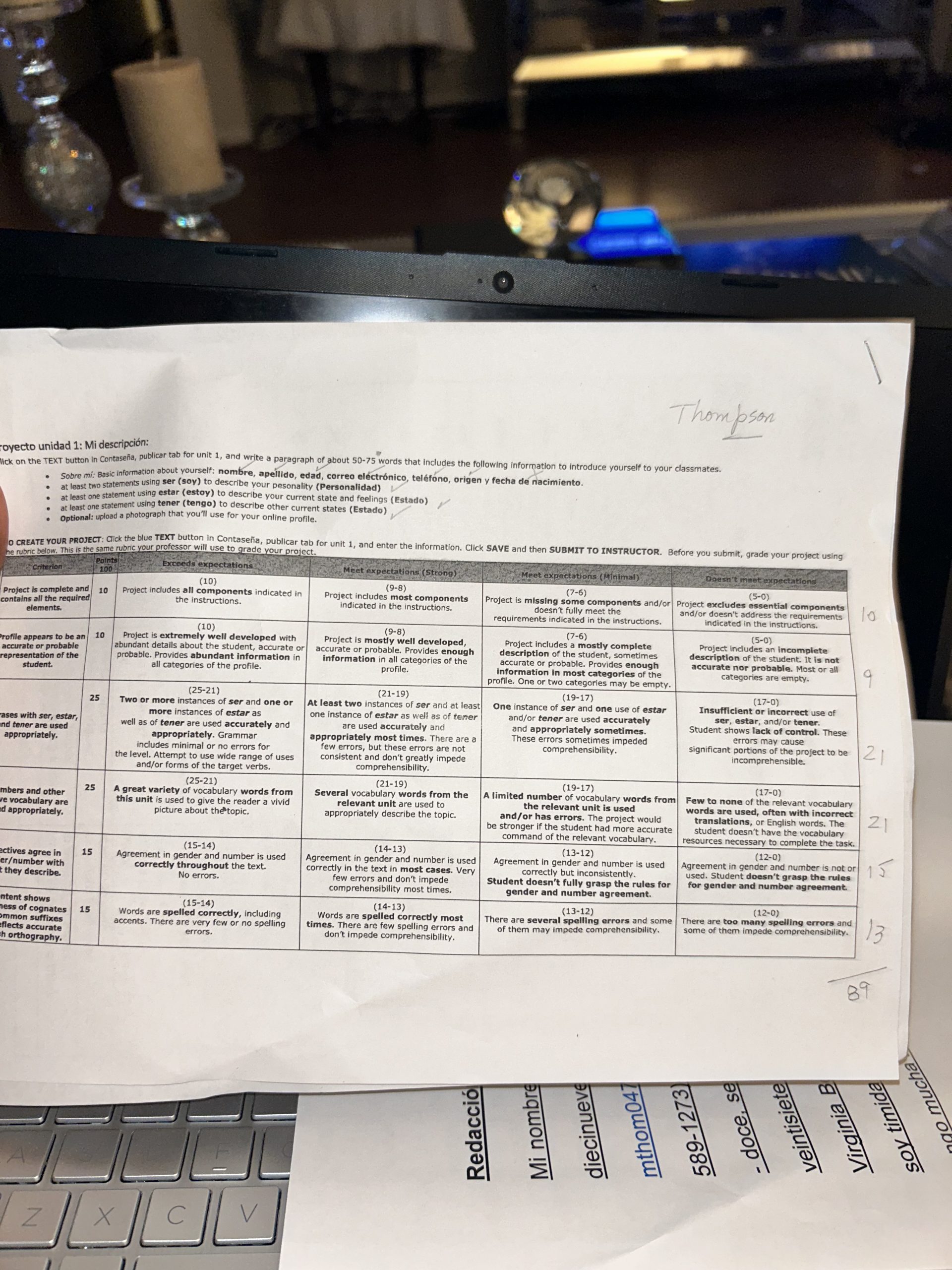
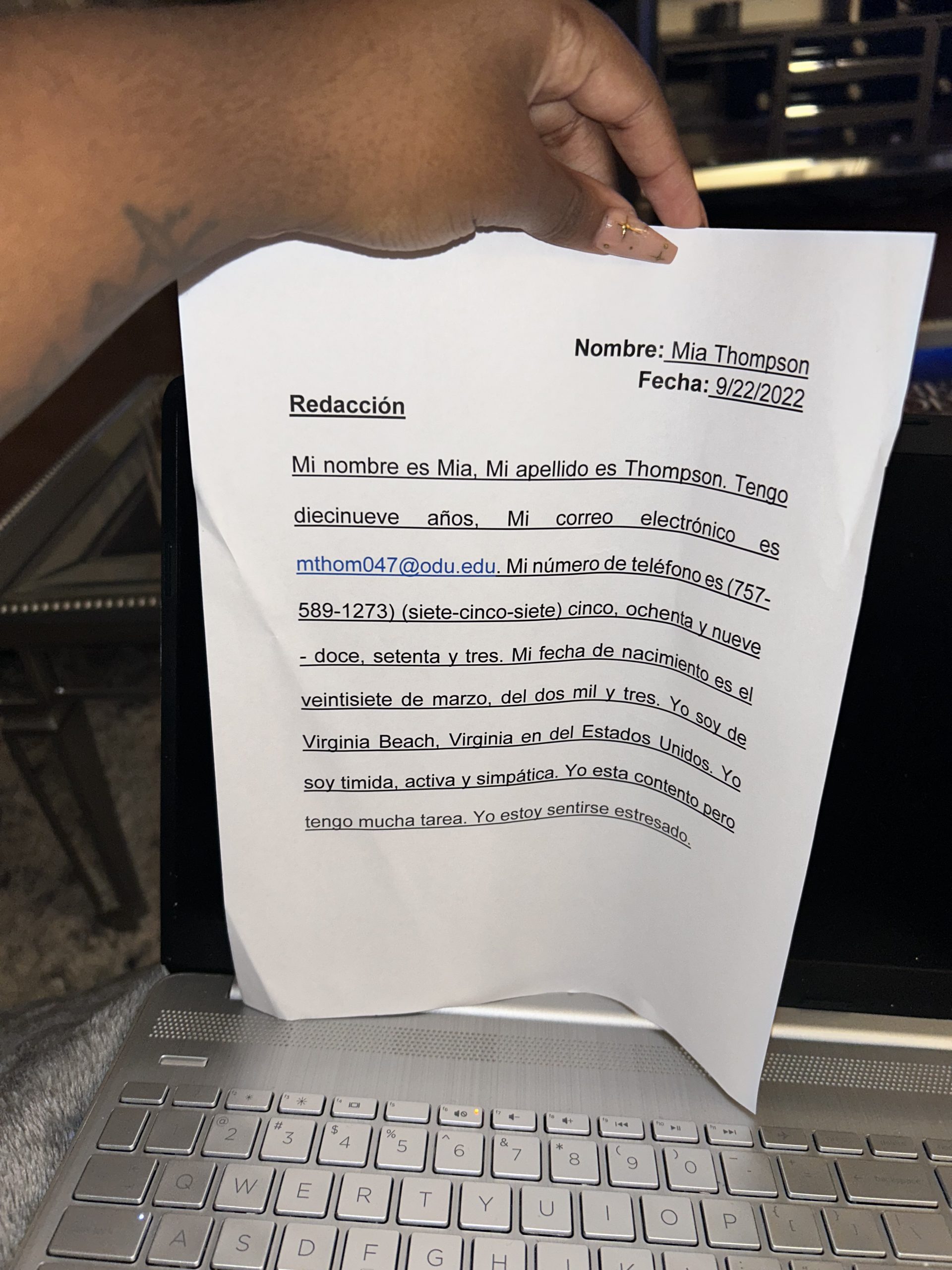
The writing was not a very large part of this class. We would write our drafts out so our teacher would be able to correct them so we would be ready for the actual assignment.
I think that writing is also one of my problem areas. I struggle with translating every word in Spanish the way would in English. Different verbs and verb connotations also trip me up so I tend to repeat myself. I try to overcome my struggles by looking up certain words to make sure my sentences are correct. My drafts would come back with only a little bit of correction but it would carry over into my speaking. I think that memorizing how to connotate verbs would help me in the future.
Interpretive Listening
In Lingro, there are listening assignments as well as “listen and response” assignments. These assignments consist of playing an audio feed and picking the correct answer or responding appropriately.
Listening and understanding are something I struggle with. I often mix up words or answer a question that wasn’t asked. The audio feeds on Lingro were very clear and most of the time had a sentence in parentheses on how to answer. I struggle the most in real-life situations. I think that I try to overcome this problem by asking my teacher to repeat the questions or try to answer part of it in English to understand better. My takeaway from this experience is to study my vocabulary more and try not to get too worked up so I can focus and listen.
Interpretive Reading
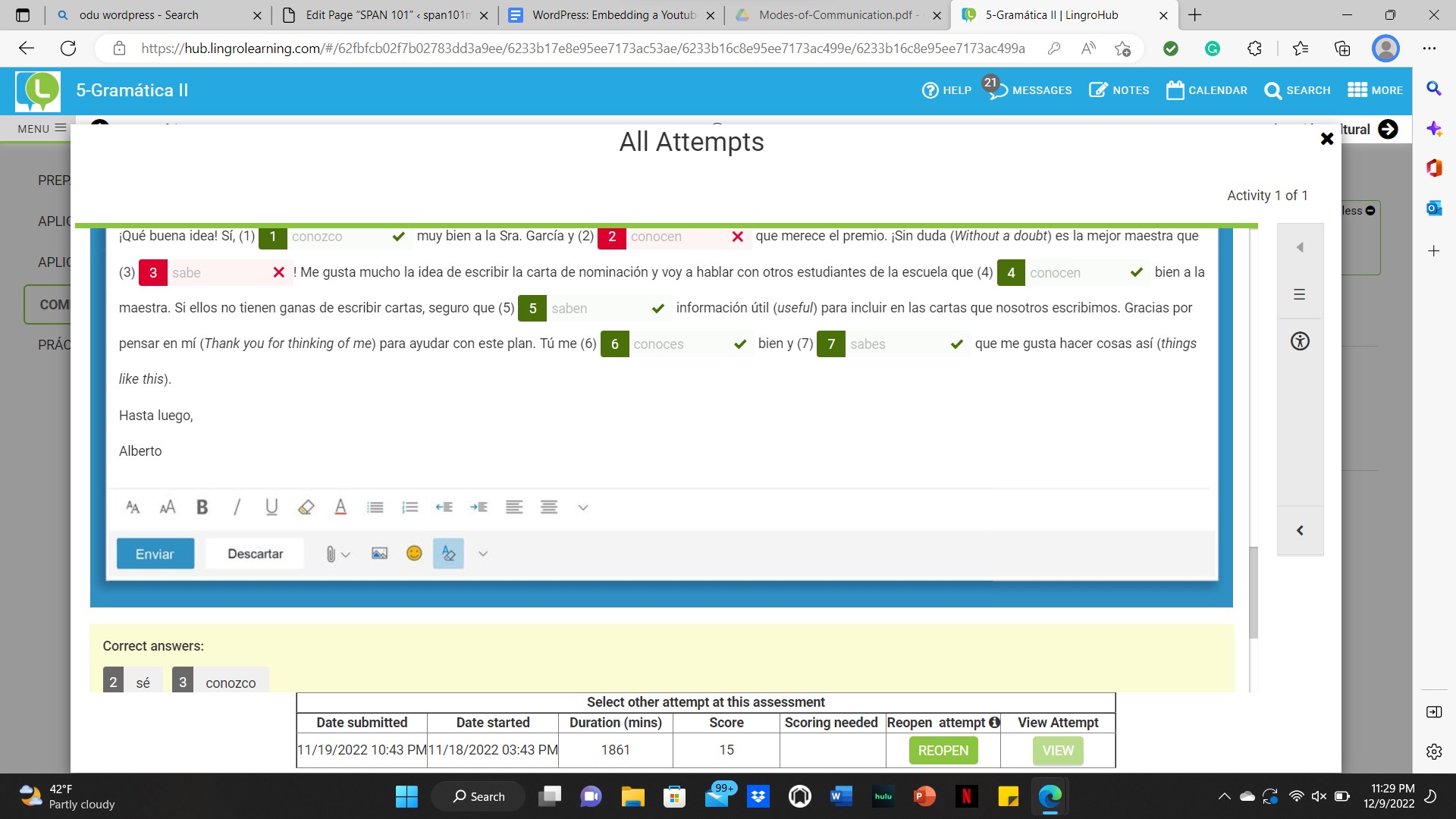
In Lingro, letters and emails are a part of the reading given in the assignments. Fill-in-the-blank assignments are used to give real-life context to how Spanish is written in certain contexts like formal or informal instances.
Reading is one of my problem areas with Spanish. Towards the end of the modules, there would be “fill in the blank” assignments. Those are like my kryptonite. I always get frustrated because I think that the words given could go anywhere. I think that as the semester went on I got better at these assignments. In the beginning, I would simply give up. Now I urge myself to try, even if I get the questions wrong.