Interpretive, Interpersonal, and Presentational Modes of Communication
Exploring Culture & Engaging in Communities
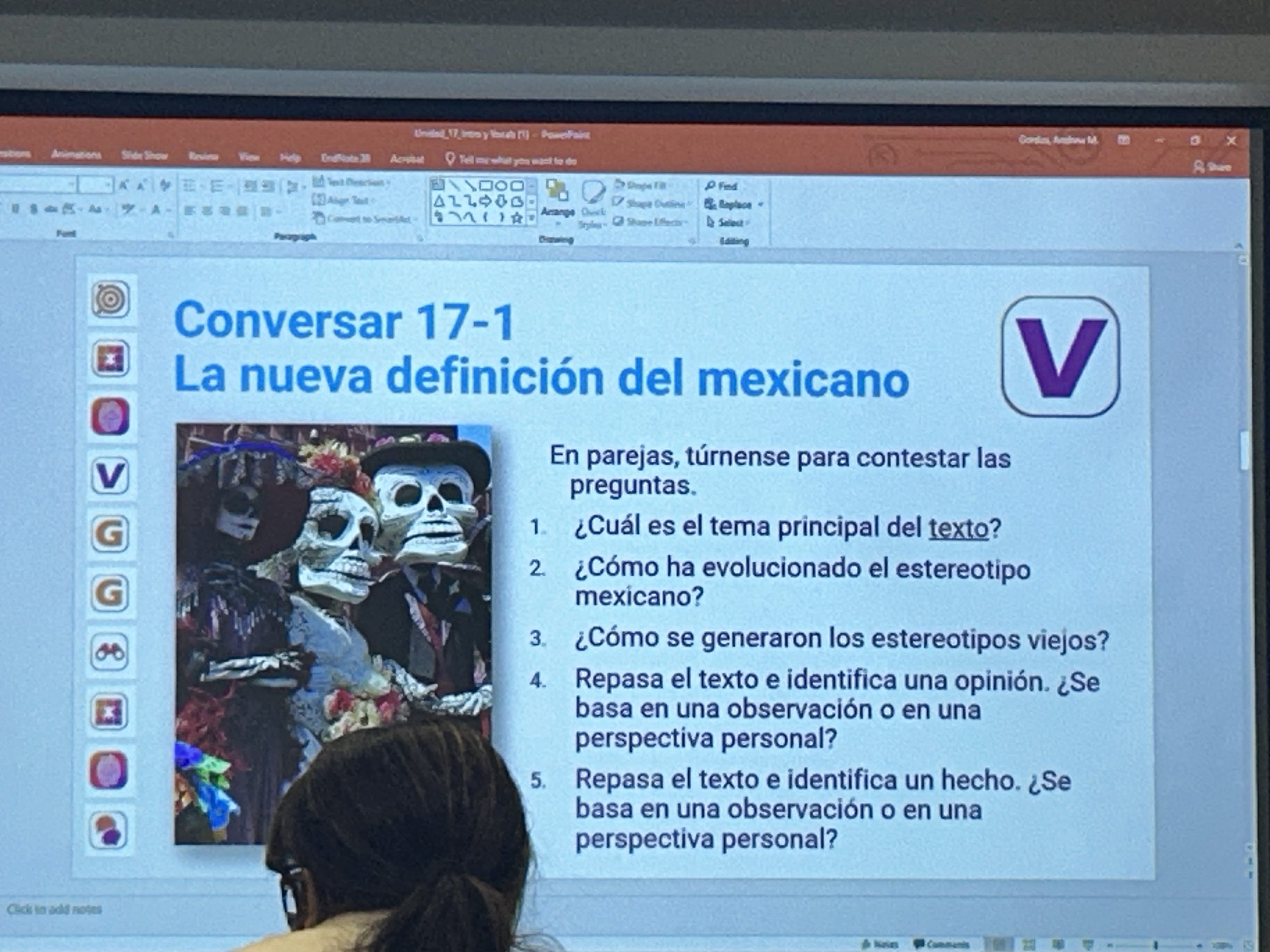
In class and in pairs, we answered these questions about stereotypes of Mexicans. We learned about stereotypes across generations and our personal perspectives on stereotypes.
These practices challenged my worldview by shedding light on how Mexicans viewed themselves which highlighted the nuances of the culture and helped me move beyond preconceived misconceptions about them. I try not to think of people through stereotypes and this practice helped me appreciate the culture even more.
Interpersonal Communication
TalkAbroad is a website in which students learning different languages can talk to native speakers or 15 or 30 minutes. You can pick your speaking partner and even their profile to gain information about them so you have more things to talk about with them.
The video below is audio of my first, TalkAbroad conversation for this semester. I think our conversation went okay but I feel like it could’ve gone a lot better. I felt good talking to her because we talked about personal things along with the unit topic. I was feeling sad about a family situation and I got to communicate that to her and it felt nice to see my growth because I don’t think I would’ve felt comfortable language-wise to do that.
Presentational Speaking
This is my last speaking project of the semester. We had to make a 3-minute video about an influencer we would like our classmates to know about. I chose Jackie Aina, a makeup and lifestyle content creator because she impacts a lot of black women including me and my mother.
I think this was my most challenging project because there was so many things I had to talk about. I don’t normally talk about social media in Spanish so this was a new challenge I was excited to overcome. My vocabulary grew a lot although it was difficult to pronounce some of the words. If I could do this differently I would take my time when learning these new words.
https://1drv.ms/v/s!AknTpnX2oFeegrYujgS070kx6ccFFQ: SPAN 202Presentational Writing
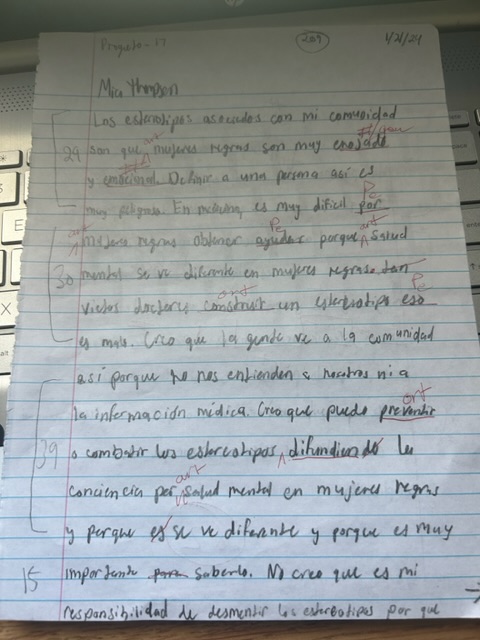
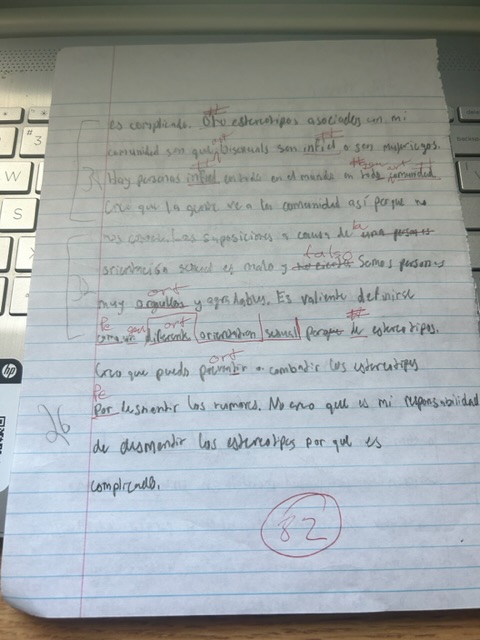
This is one of my PASO 2 projects for unit 17 where we had to write our rough drafts in class. We had to write an essay of about 200 words about the stereotypes associated with my country, region, city or community.
This class was a lot different than my other Spanish classes. In my past classes, we had to write the rough draft at home and then we would turn them in and get corrections. In this class, we write our rough drafts in class instead of turning them into Contresena. This was a challenge for me because at home I can study my notes and look things up when I need to but I think this class helped grow my writing skills by teaching me to not rely on my notes.
Interpretive Listening
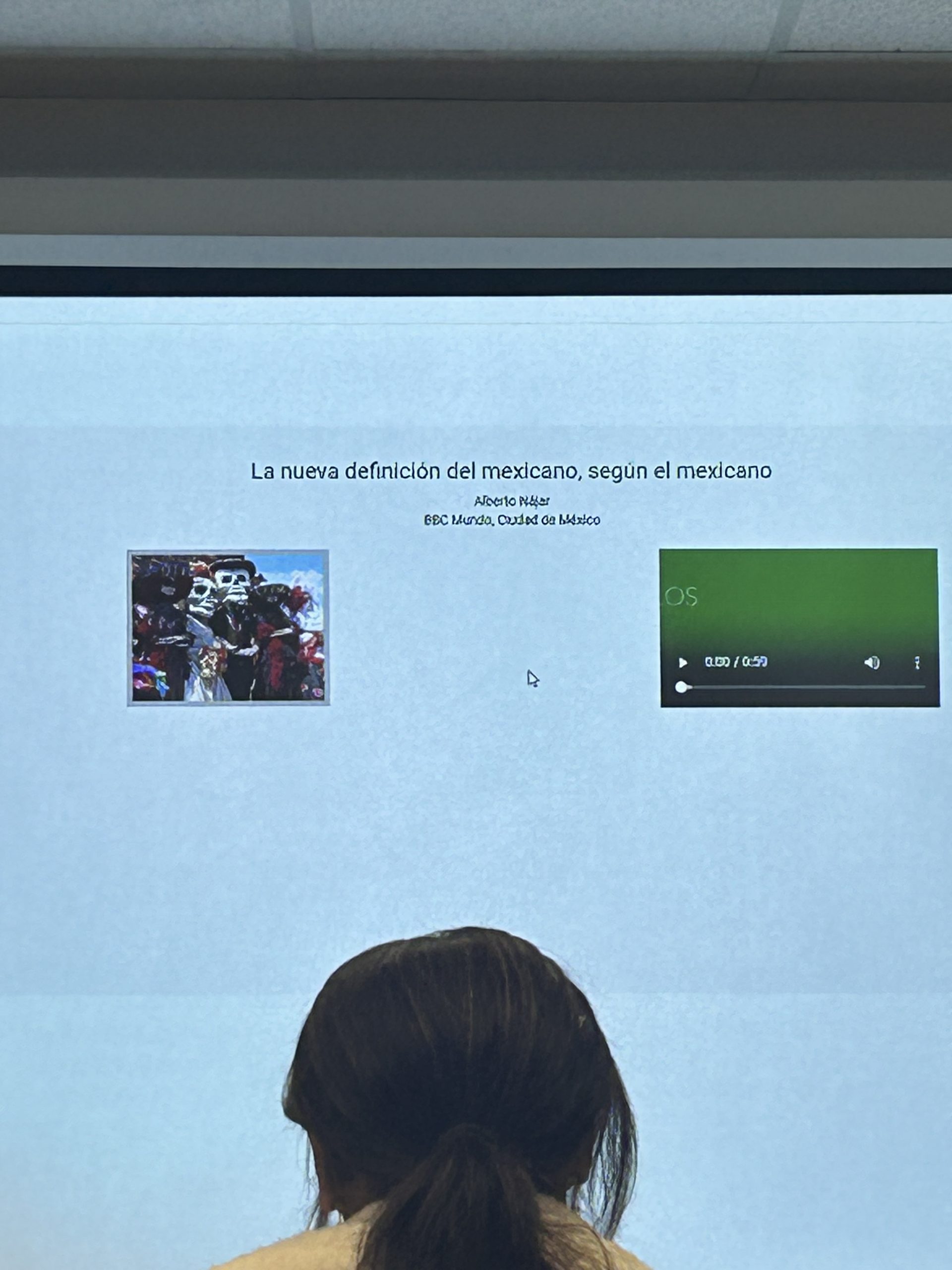
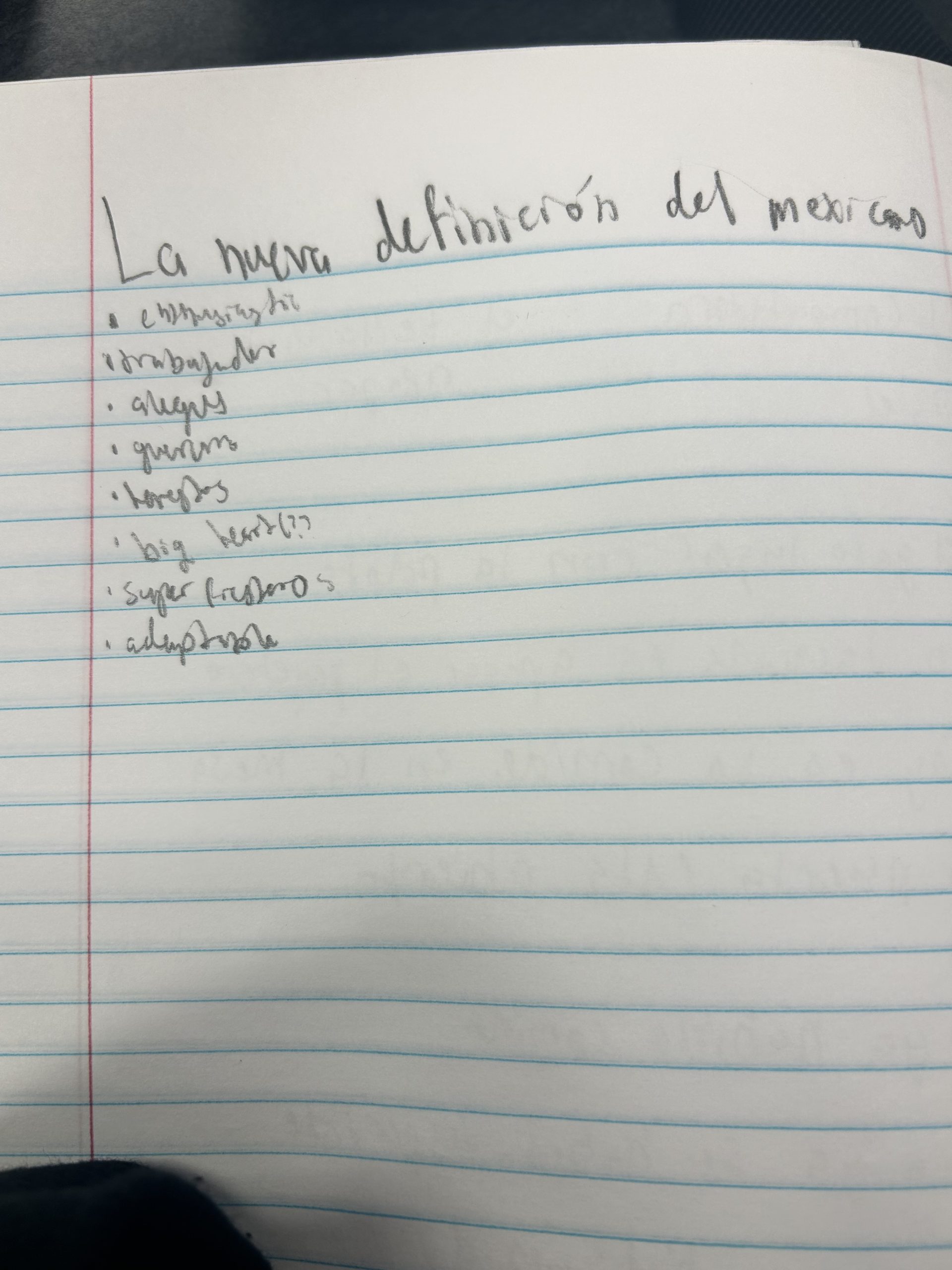
In class, we listened to a video of Mexican people describing themselves in regard to their heritage. Then we had to make a list of all the adjectives they used to talk about themselves.
This was difficult for me because listening to Spanish in a video is a lot faster than in a regular conversation. I overcame this by going over it in class with my classmates and teacher as well as partner work and communicating with my classmates. I have grown with each activity by getting better at using my context clues and listening skills to try to understand what is being said.
Interpretive Reading
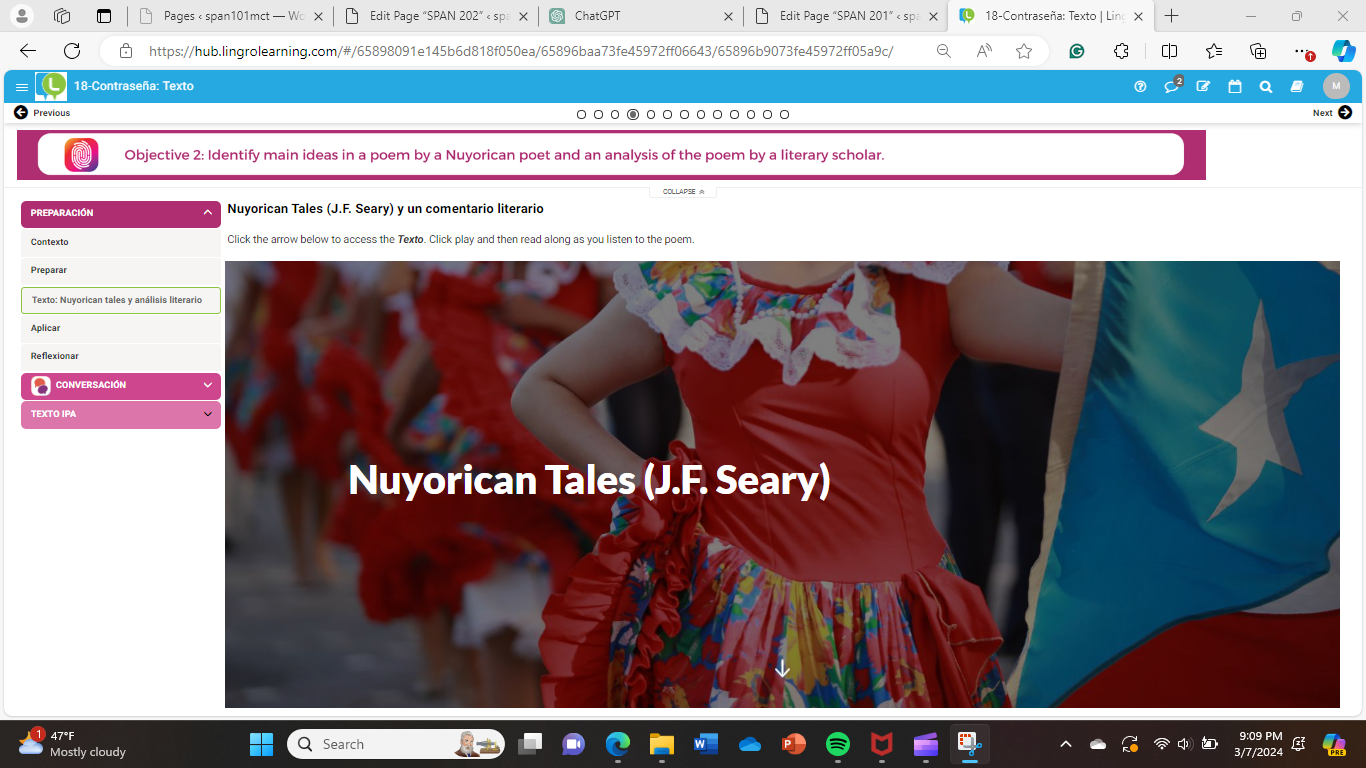
In this unit, we learned about the culture of Nuyoricans. We learned about dual-heritage Latinos through poetry and an article informing us about the author of the poem Nuyorican Tales, J.F. Seary.
This assignment was very fun for me as a poetry lover. I read many poems about Hispanic people who feel like they have multiple identities since they were not born in their respective countries, had to migrate to the United States, or do not speak their native tongue. Most of the poems were spoken word which is an impactful form of poetry and they also had both words in English, Spanish, and “Spanglish” which was very meaningful for me.
When you have finished adding content to this page, delete all the instructions except the link to the Modes of Communication.