
Behind “HIS” Jersey
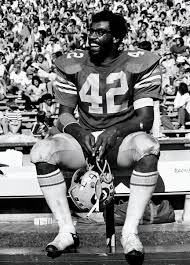
Well before his NFL journey began, the headlines and challenges, Charles Muncie, affectionately known as Chuck, was simply a young boy from Uniontown, Pennsylvania, striving to surpass the expectations set for him. As one of seven siblings, Muncie was raised in a bustling setting where aspirations frequently ceased before they could truly begin. His early experience in a car crash that almost took his life and resulted in a broken leg was a crucial point in his life. Doctors were apprehensive that it could jeopardize his sports career before it even began. Nonetheless, one aspect of Muncie was that he never resembled others. He was resolved to achieve success and stand out from the crowd.
Despite facing numerous challenges and immense pressure, Chuck Muncie found motivation to transform his suffering into strength. Fueled by determination and concentration, he discovered his passion for sports and ultimately emerged as a standout running back at the University of California, Berkeley. His mindset, perspective, and skill to make defenders ignore distinguish him. By 1975, he had become one of the leading players in the NFL Draft and was chosen third by the New Orleans Saints, a rising team. That same year, he created history by becoming the first Black player from California selected in the first round. It was an instant that represented a significant advancement in his career and created history.
Chuck Muncie was a pleasure to behold. Fans knew something special would happen every time he touched the ball. A man among boys, he weighed 225 pounds and stood 6’3″. Muncie made the Pro Bowl in 1979; the Saints franchise had never seen such play before, and it was an institutional endeavor, a league wide recognition. He was a great player. The off-the-field issues were as noticeable in a different game. He did not want to let anyone down in particular, himself so, as a personal and private under the table matter of accomplishments, pressures, expectations, and stardom, he tried to mask any substance abuse through the years. However, when he was traded to the San Diego Chargers, he played his best seasons with the Chargers, taking them to the AFC Championship Game, earning two more Pro Bowl selections, and tying the NFL record for touchdowns in one season. He worked wonders on the field and achieved sustained records along with inconsistent stretches off of it.
Muncie’s history, however, of playing and personal life caught up to him in 1984 as it all came crashing down. It started with missing a scheduled team flight; then, he failed a test on a drug screen, and so the NFL suspended him. He retired the following season, but not before serving time in jail for distribution a couple of seasons after. Jail, however, was the best thing that happened to him. He became sober in prison, faced the music, and adopted a new perspective on life to help others. He later founded the Chuck Muncie Youth Foundation, utilizing his narrative to encourage athletes and young people to choose a better course. He wanted to advocate for them and be part of their lives through thick and thin. Even after he got out, he was committed to the same community in that he would preach about his experience and make sure others would learn from it in safe spaces such as community centers, juvenile halls, and schools. There was no reason for Muncie to strive for anything else. All because he owned up to his errors and, in the end, transformed so many lives.
Chuck Muncie died in 2013 from a heart attack, but afterward, he was an inspiration and impact champion for his non-football contributions. He was not just an athlete but a man who took every opportunity, an educator, and a captain of his profession. Chuck Muncie’s foundation and community support make him a living legacy of a purposeful life. He demonstrated that you can get back up after you get knocked down to help others help themselves. His life shows us that greatness does not come from scoring touchdowns and winning championships; it comes from transforming lives for those people who need to be believed in. That makes a true leader, and he was one of them. Well before his NFL journey began, the headlines and challenges, Charles Muncie, affectionately known as Chuck, was simply a young boy from Uniontown, Pennsylvania, striving to surpass the expectations set for him. As one of seven siblings, Muncie was raised in a bustling setting where aspirations frequently ceased before they could truly begin. His early experience in a car crash that almost took his life and resulted in a broken leg was a crucial point in his life. Doctors were apprehensive that it could jeopardize his sports career before it even began. Nonetheless, one aspect of Muncie was that he never resembled others. He was resolved to achieve success and stand out from the crowd.
Despite facing numerous challenges and immense pressure, Chuck Muncie found motivation to transform his suffering into strength. Fueled by determination and concentration, he discovered his passion for sports and ultimately emerged as a standout running back at the University of California, Berkeley. His mindset, perspective, and skill to make defenders ignore distinguish him. By 1975, he had become one of the leading players in the NFL Draft and was chosen third by the New Orleans Saints, a rising team. That same year, he created history by becoming the first Black player from California selected in the first round. It was an instant that represented a significant advancement in his career and created history.
Chuck Muncie was a pleasure to behold. Fans knew something special would happen every time he touched the ball. A man among boys, he weighed 225 pounds and stood 6’3″. Muncie made the Pro Bowl in 1979; the Saints franchise had never seen such play before, and it was an institutional endeavor, a league-wide recognition. He was a great player. The off-the-field issues were as noticeable in a different game. He did not want to disappoint anyone, especially himself. He carried a heavy mix of expectations, pressure, and fame. Over the years, he tried to hide his drug use. After being traded to the San Diego Chargers, he had some of the best seasons of his career. He played in the AFC Championship Game, made two more Pro Bowls, and tied the NFL record for most touchdowns in a season.
Muncie’s history, however, of playing and personal life caught up to him in 1984 as it all came crashing down. It started with missing a scheduled team flight; then, he failed a test on a drug screen, and so the NFL suspended him. He retired the following season, but not before serving time in jail for distribution a couple of seasons after. Jail, however, was the best thing that happened to him. He became sober in prison, faced the music, and adopted a new perspective on life to help others. He later founded the Chuck Muncie Youth Foundation, utilizing his narrative to encourage athletes and young people to choose a better course. He wanted to advocate for them and be part of their lives through thick and thin. Even after he got out, he was committed to the same community in that he would preach about his experience and make sure others would learn from it in safe spaces such as community centers, juvenile halls, and schools. There was no reason for Muncie to strive for anything else. All because he owned up to his errors and, in the end, transformed so many lives.
Chuck Muncie died in 2013 from a heart attack, but afterward, he was an inspiration and impact champion for his non-football contributions. He was not just an athlete but a man who took every opportunity, an educator, and a captain of his profession. Chuck Muncie’s foundation and community support make him a living legacy of a purposeful life. He demonstrated that you can get back up after you get knocked down to help others help themselves. His life shows us that greatness does not come from scoring touchdowns and winning championships; it comes from transforming lives for those people who need to be believed in. That makes a true leader, and he was one of them.
Citations: Slotnik, D. E. (2013, May 14). Chuck Muncie, football star with a troubled past, dies at 60. The New York Times. https://www.nytimes.com/2013/05/15/sports/football/chuck-muncie-football-star-with-a-troubled-past-dies-at-60.html