Overall, Four Corners Level 3 is a user-friendly and engaging choice for intermediate B1 learners. It includes 12 units and integrates lessons on grammatical language structures, new vocabulary, social functions of language, listening, word and sentence pronunciation, reading comprehension, text production, and speaking in every chapter. A combination of visual, textual, and auditory elements make for an enriched learning experience. Additionally, there is an even mix of individual, pair, and group work in each chapter. Finally, the lessons used to teach English in this book have real-world significance and inspire dialogue both inside and outside of the classroom.
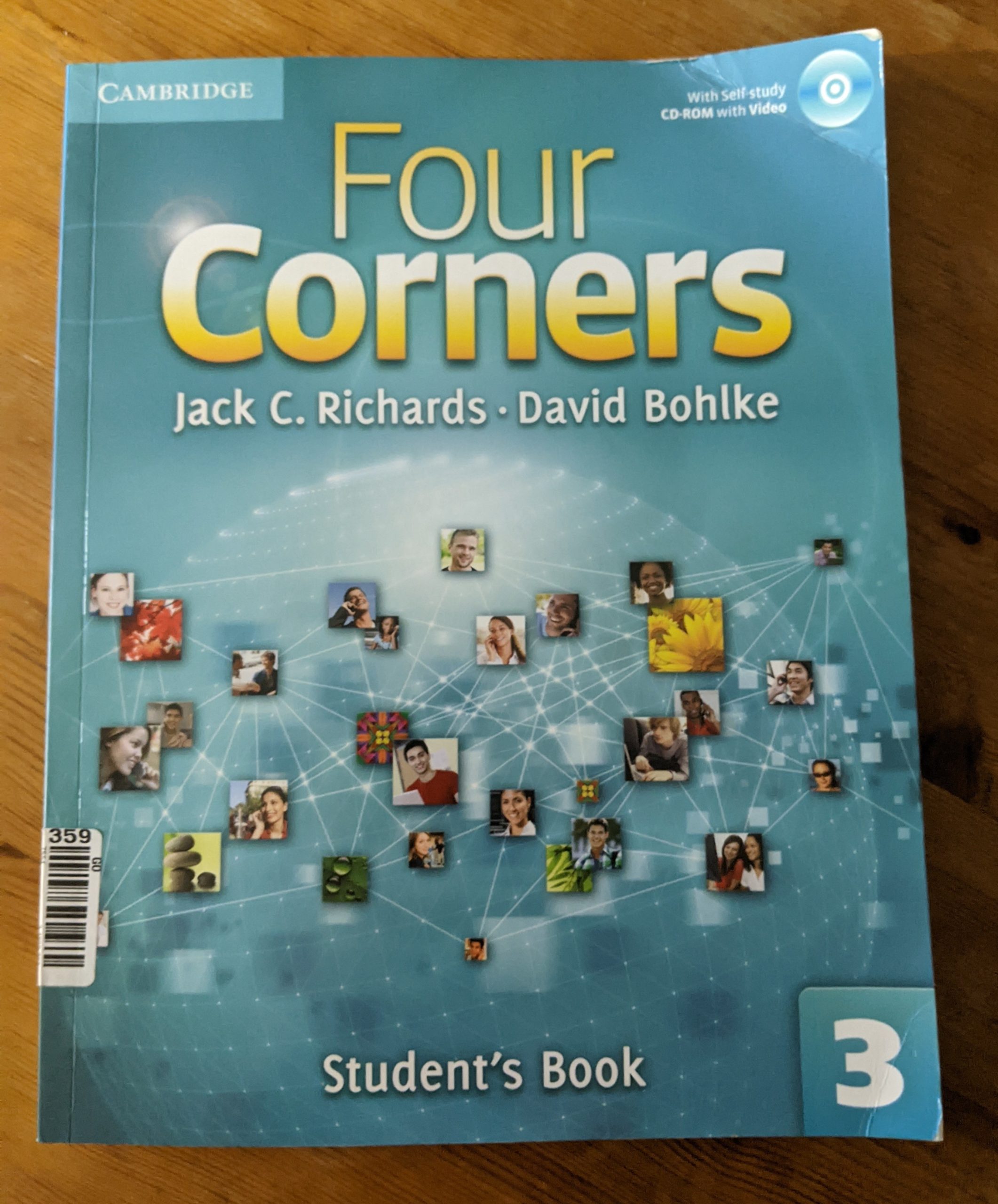
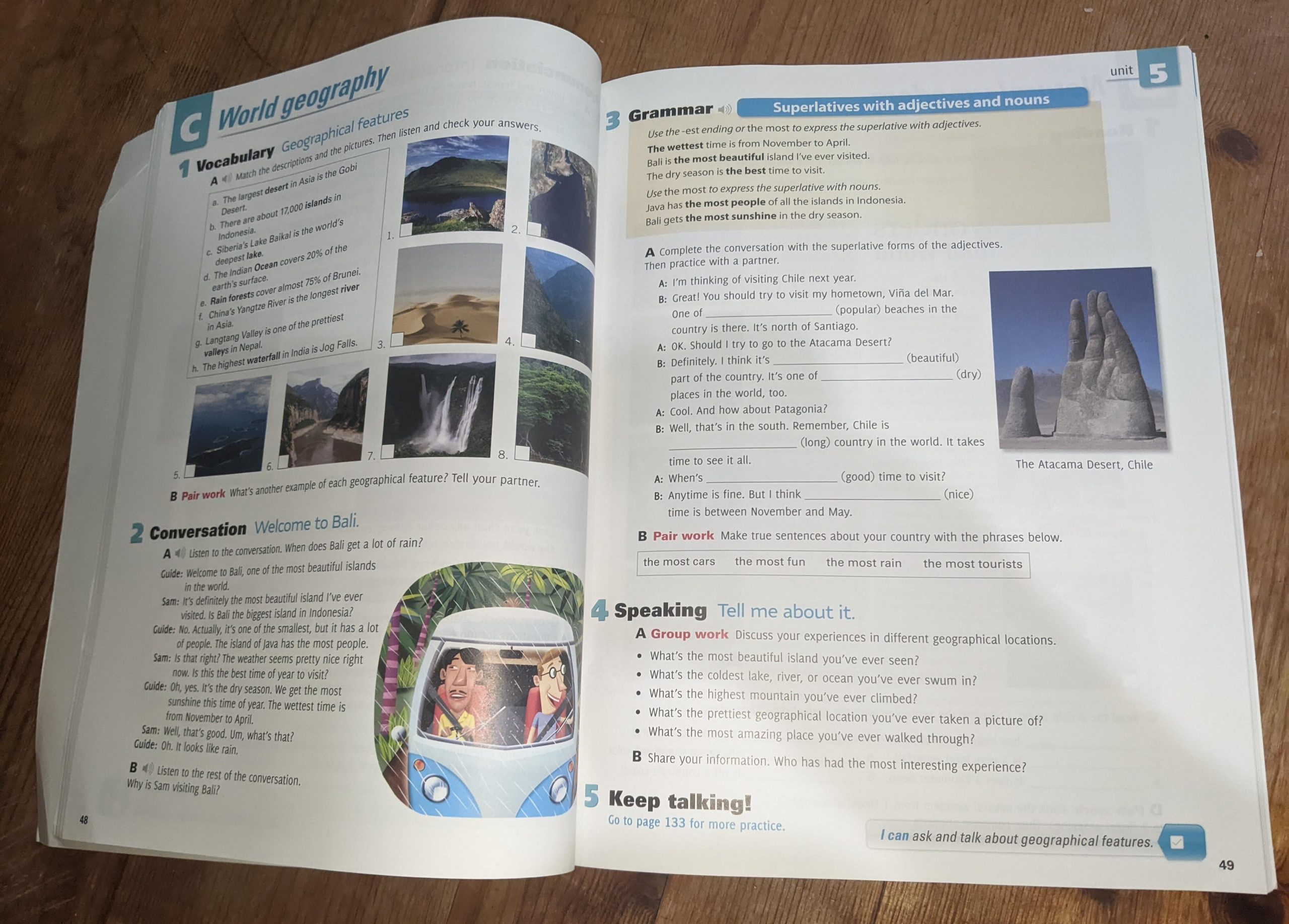
This textbook offers several key beneficial features for English L2 learners. First, each chapter is diverse in the types of language skills developed (i.e., listening, speaking, reading, writing) as well as activities that involve individual, paired, or group learning. For example, each chapter is broken down into several sections, with each section starting with either reading, vocabulary, or interactions (dialogues) and then having several different types of language activities grouped in with it, such as grammar, writing, or speaking. No matter what chapter students learn, they are guaranteed to get practice in all areas of language development that are listed in the scope and sequence.
Furthermore, each chapter focuses on a particular subject, and each section focuses on a social function of language that students can utilize outside of the classroom. For example, Unit 5 is about world geography, man-made landmarks, and the environment, and one of the sections focuses on teaching students how to describe and ask about geographical features. Another strength that the textbook has is its abundance of exercises that encourage students to provide anecdotes or their own opinions on the lesson material. For example, one exercise encourages students to explore their zodiac sign in relation to their personality traits. In short, the textbook strives to teach and personally engage students at the same time.
One significant area where an instructor should supplement the textbook is by encouraging students to compare their L1 to English. While the textbook contains many invitations for anecdotes and cultural dialogue, an explicit invitation to compare English to the students’ native language is not there. A teacher could, for example, encourage the comparison between a grammatical structure in the students’ native language and a corresponding or opposite structure in English. This practice may further engage the students and facilitate learning of English.
An additional area to supplement the textbook would be to have students do additional practice with language skills learned in each textbook chapter; although the textbook effectively introduces vocabulary and language structures for a particular topic, it does not practice the same topic twice. Teachers may want to perform additional lessons on one topic’s material so that students do not forget it. In summary, Four Corners Level 3 effectively utilizes diverse learning objectives, real-world situations, and all-encompassing chapters to give an in-depth English learning experience. Intermediate B1 students who already have basic familiarity with English will be able to adapt the vocabulary and grammar that they already know to learn about more information and apply English to a wider variety of topics that students are likely to encounter in everyday life. The variety of language activities in each chapter with differing levels of individual and peer interaction create a diverse and all-encompassing English acquisition experience.