I chose to evaluate the first chapter of the textbook, Unit 1, whose focus is on education. This chapter has 4 sections: Section A teaches students how to ask and talk about daily routines related to school and work and features a lesson on the difference between simple present and present continuous. Section B teaches students how to express prohibitions and obligations with an emphasis on listening and speaking activities. Section C teaches students how to talk about their feelings and reactions and features a lesson on zero conditional sentence structure. Section D teaches students how to discuss advantages and disadvantages of a thing or situation, specifically using the issues of homeschooling and distance education as examples. Lastly, the chapter concludes with a “wrap-up” activity that has students exercise the skills learned from all sections.
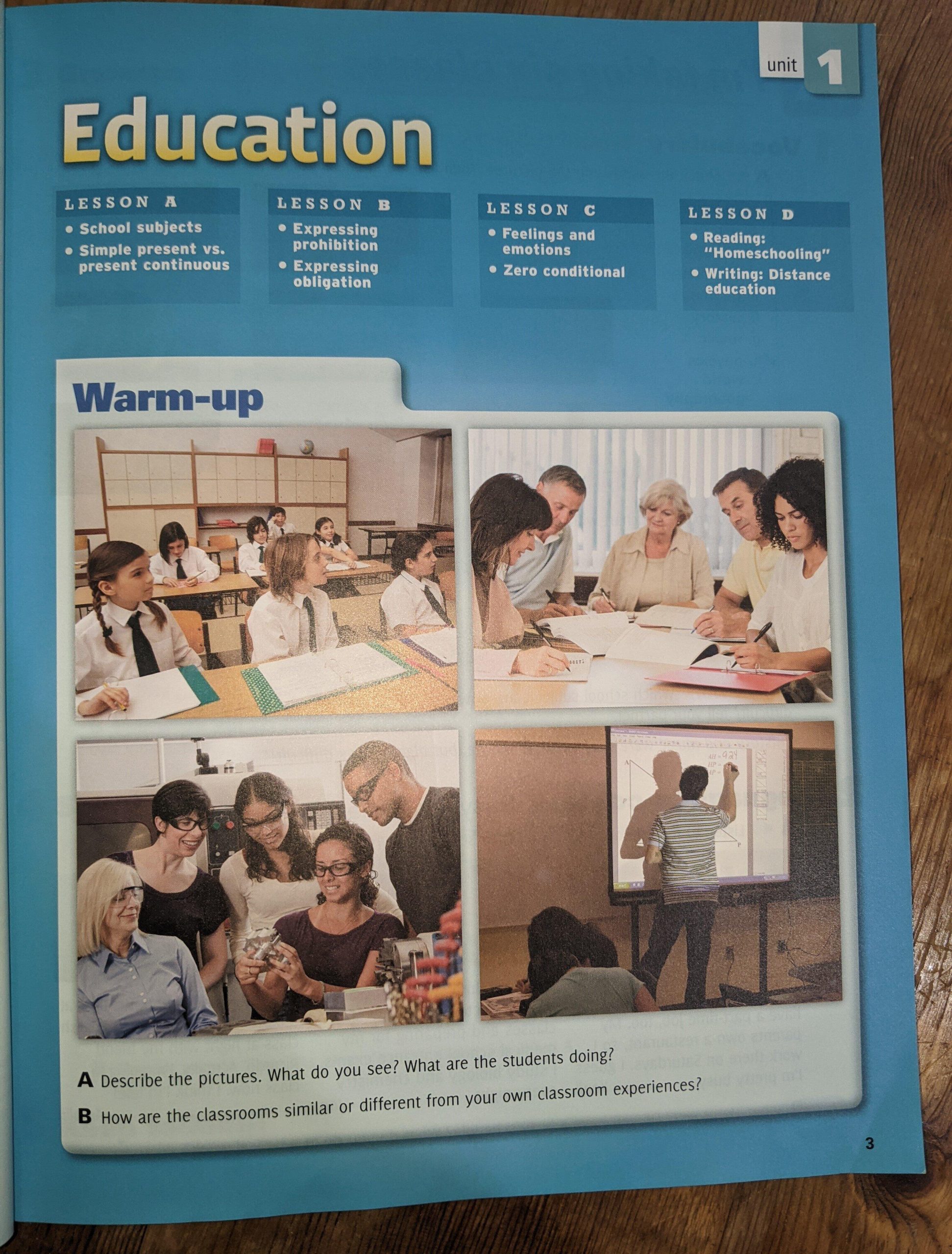
Each section in the chapter follows a general pattern of beginning with an introduction of either vocabulary or the sentence structures to be used and then having students repeat and replicate the vocabulary and language structures in their own manufactured ways. For example, Section A begins with the names of different school subjects, followed by several sample texts of students describing everyday rituals with their work and classes. Then, students are taught to describe everyday routines using both school subject vocabulary and the simple present and present continuous verb tenses for narration. Finally, the last activity in the section has students create their own oral responses where they describe the classes they take, the jobs they work, and their future goals for school and their careers. Each section follows a similar pattern, and the “wrap-up” activity at the end of Unit 1 contains exercises on each of the four lessons, as well as an additional research activity encouraging students to research “multi-age classrooms” and then come up with a list of advantages and disadvantages of multi-age classrooms.
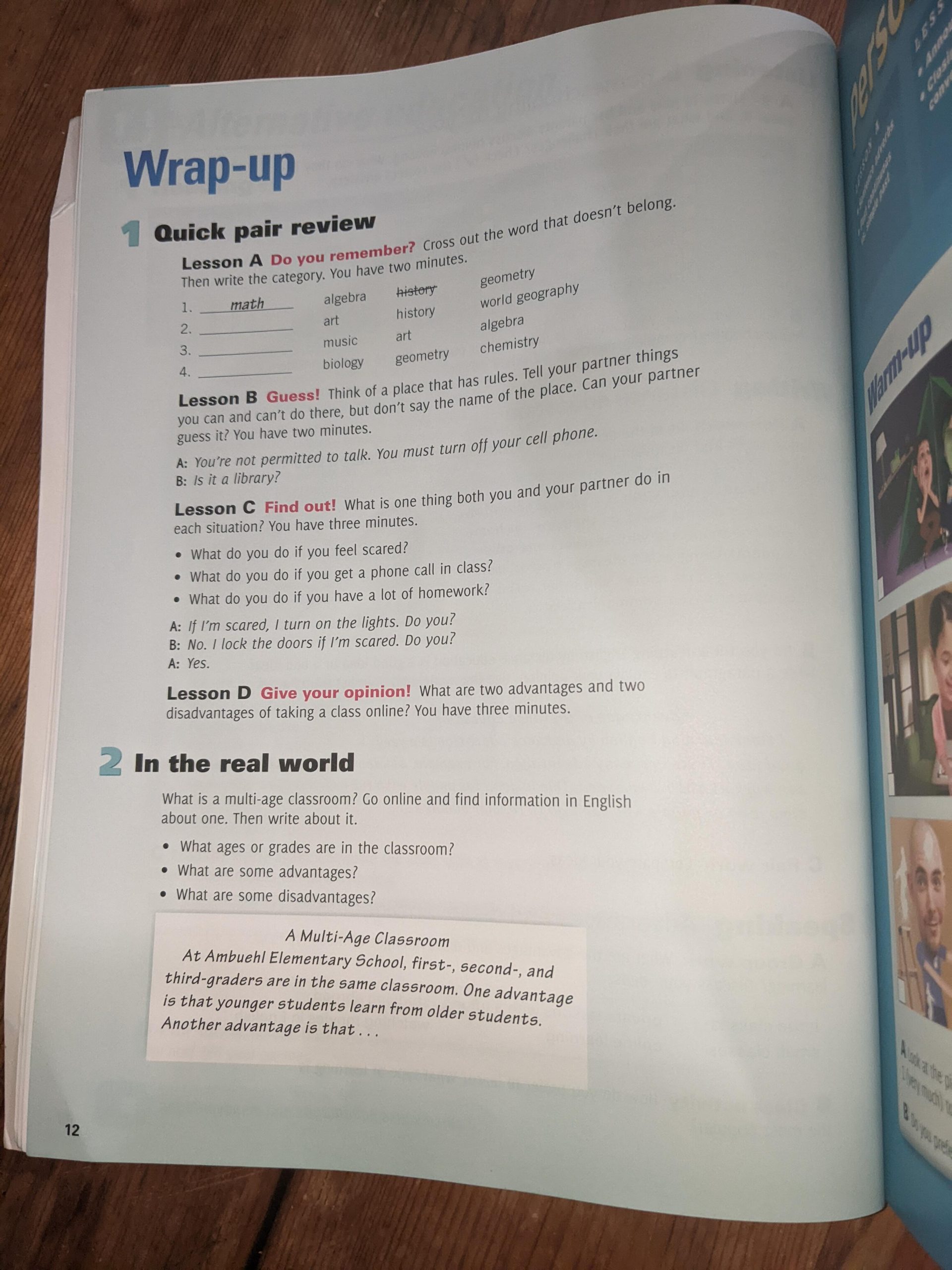
I consider Unit 1 to appropriately set the stage for the rest of the textbook and each section to represent a logical progression from content acquisition to application and structured to semi-controlled and unstructured exercises. I also consider it a strength for students to be able to come up with their own dialogues after having been taught the appropriate vocabulary and sentence structures because students may become more engaged in the learning process by being able to describe personal stories and their own opinions on issues. I also consider the lessons of each section to fit logically with the theme of the unit. The theme of Unit 1 is fitting for the context of being an L2 learner and presents a clear opportunity to use English in one of the most important areas of life: work and school. However, one potential disadvantage of the chapter is that L2 students are not prompted to compare English to their L1, but this is an issue for the whole textbook. Otherwise, the chapter and its material are age-appropriate, proficiency level-appropriate, logically progressive, user-friendly, and relevant to the real world.