Professional Communication
Strong communication is critical in law enforcement and investigative work. Through my experiences in the ODU Police Citizens Academy, internship presentations, and public speaking, I’ve demonstrated my ability to communicate clearly and confidently in both professional and public settings.
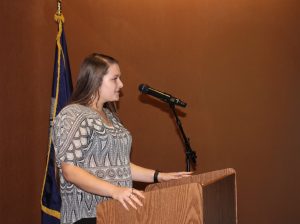
Artifact 1: Class Speaker at ODU Police Citizens Academy
Description: I was selected to represent my class as the speaker during the closing ceremony for the ODU Police Citizens Academy. This speech allowed me to reflect on what we learned while presenting to university officials and law enforcement professionals, showcasing my public speaking and leadership skills.
Artifact 2: Internship Class Portfolio – IDS 368
https://ntobi001.wixsite.com/nikole-tobin/
Description: This portfolio was created as part of my internship course and documents my field experience with both the Chesapeake Sheriff’s Office and the Virginia Beach Police Department. It includes weekly logs, reflective essays, and detailed observations of law enforcement operations. Throughout this project, I demonstrated the ability to clearly articulate my experiences, maintain professional tone and structure, and reflect critically on the responsibilities and ethics involved in investigative work. It showcases my growth as a communicator and my ability to translate real-world experience into organized, meaningful content.
Artifact 3: Networking & Relationship Building with Officers
Description: Through my internships and ride-alongs, I built lasting professional relationships with officers and detectives. These connections are a testament to my ability to communicate effectively in a professional environment.

Investigative and Analytical Thinking
With a focus on cybercrime and accounting, I’ve developed strong investigative and analytical thinking skills. Through internships and academic work, I’ve learned to evaluate evidence, identify patterns, and think critically in complex situations.
Artifact 1: Internship Experience – Chesapeake Sheriff’s Office
Description: During my time at the Chesapeake Sheriff’s Office, I observed and assisted with various administrative and investigative tasks. I developed an understanding of data analysis, documentation, and real-world criminal procedures.
Artifact 2: Cybercrime Coursework Project
Description: This academic project focused on analyzing fraudulent financial behavior and how digital traces can lead to detection. It combines both fields of my study and shows critical thinking applied to cyber investigations.
Categories of Cybercrime DATA DETECTIVES
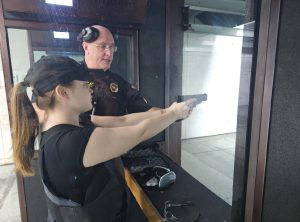
Artifact 3: Real-Life Emergency & Investigative Simulations – ODU Citizens Academy
Description: During the ODU Police Department Citizens Academy, I participated in a variety of hands-on simulations designed to reflect real-world law enforcement and emergency response scenarios. These included Stop the Bleed training, CPR and Heimlich maneuver (abdominal thrust) practice, evidence collection and handling exercises, and fire response simulations using extinguishers. Each scenario required quick decision-making, composure under pressure, and the ability to follow precise procedures — all of which are essential in investigative and emergency situations. These experiences deepened my understanding of fieldwork and built confidence in my ability to respond effectively in critical moments.
Technical Proficiency
In both cybercrime and investigative work, technical skills are critical. I have hands-on experience using programming tools like NetBeans, and I’ve developed projects using Java and Python. Combined with my certifications in Microsoft Excel, Word, and PowerPoint, I’m comfortable working with data, writing scripts, building reports, and using technology to support analysis and communication in a professional setting.
Artifact 1: Java Programming Project – NetBeans
Description: As part of my coursework, I built a Java-based application using NetBeans. This project sharpened my understanding of object-oriented programming, debugging, and designing user-friendly functions. It also gave me hands-on experience working in a real development environment — an important foundation for future work in cyber investigations and digital forensics.

Artifact 2: Python Script – Data Analysis Practice
Description: I developed a Python script to perform basic data analysis, such as sorting, filtering, and summarizing data sets. This exercise helped me understand how Python can be used in investigative work — particularly for automating processes or examining large amounts of digital evidence efficiently.

Artifact 3: Excel in Accounting Coursework
Description: In my accounting coursework, I used Microsoft Excel to complete detailed financial exercises such as creating ledgers, performing reconciliations, and analyzing budget data. These assignments required strong attention to detail and the ability to organize complex numerical information. My Excel certification, combined with hands-on accounting projects, has given me a solid foundation in financial data management — a skill set that directly supports roles in fraud detection, forensic accounting, and cybercrime investigations.