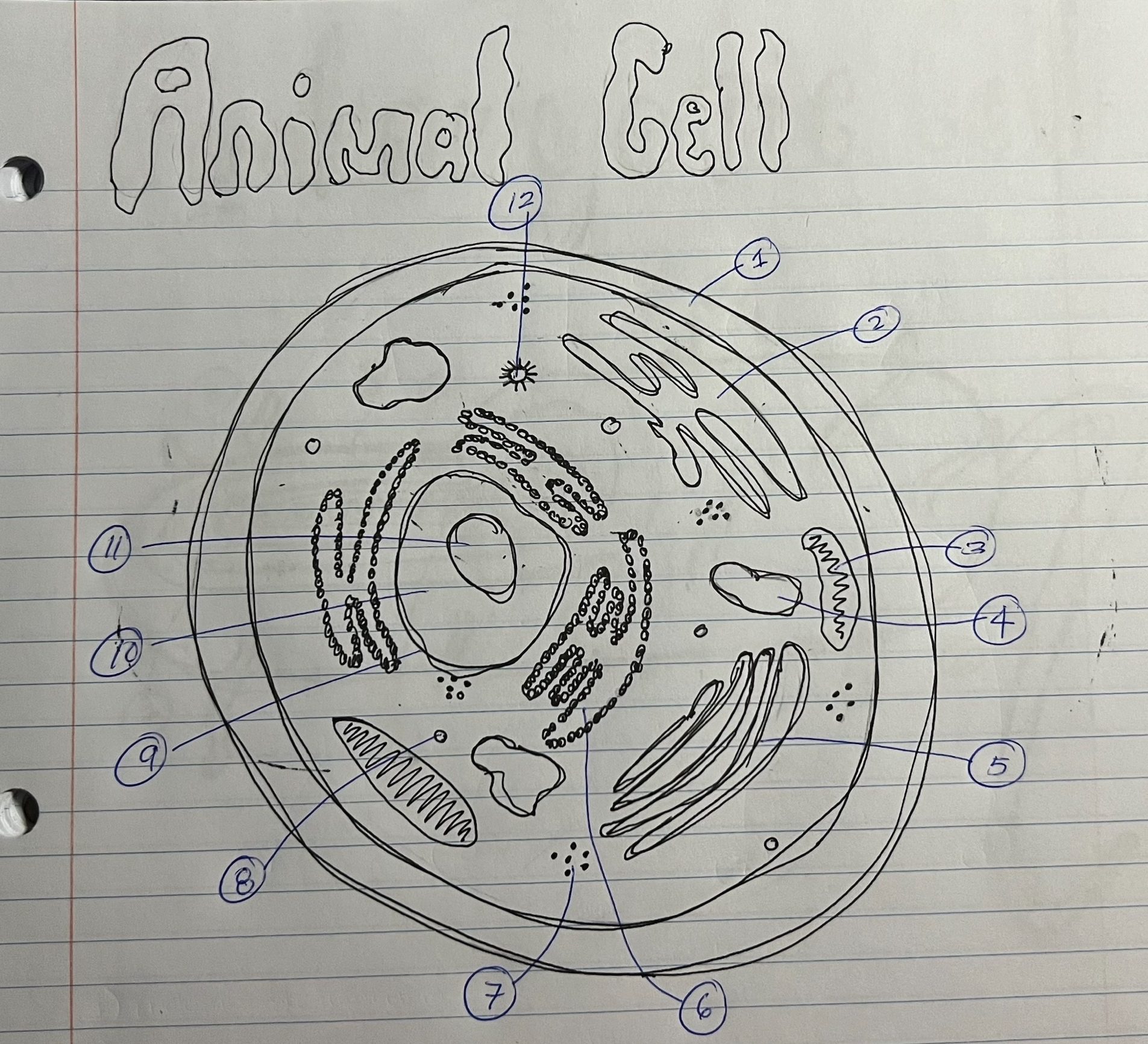
Cell Membrane – a thin semipermeable layer of lipids and proteins surrounding the cell. Its role is to protect cell from its surrounding as well as control nutrients that enters and exit the cell.
Smooth Endoplasmic Reticulum – in charge of several processes including the synthesis of lipids, the production of steroid hormones, and getting rid of toxic by-products which could negatively impact the cell.
Mitochondrion – act as the energy supplier for the cell; function of mitochondria is to take nutrients and produce the energy needed to power the biochemical reactions of the cell. This energy takes the form of adenosine triphosphate (ATP), which is a molecule used for storing and transferring energy within a cell.
Vacuole – are membrane-bound sacs that store food, water, and waste. Its function is very similar to the lysosome; act like lockers because they store things for the cell.
Golgi Apparatus – the “delivery service” or “mailroom” for the cell; takes the proteins and lipid molecules that are processed by the endoplasmic reticulum and places them into vesicles to be distributed either within or outside the cell.
Rough Endoplasmic Reticulum – is made up of tubules, cisternae, and vesicles, and plays an important role in producing and processing proteins for the cell.
Ribosomes – take and translate information from the rRNA that is needed to create the proteins for the cell; called the “manufacturing department” of the cell.
Lysosome – he “waste disposal and recycling center” for the cell because they destroy old proteins to reuse them; a membrane-bound organelle that contains enzymes required for digesting and recycling cell by-products. Lysosomes are also responsible for getting rid of waste through a process known as autophagocytosis, where old and no longer working cell parts are removed from the cell.
Nuclear Membrane – it is a double-membrane structure that surrounds the nucleus. It is also referred to as the nuclear envelope.
Nucleus – an organelle that contains several other sub-organelles such as nucleolus, nucleosomes and chromatins. It also contains DNA and other genetic materials.
Nucleolus – where ribosomal RNA (rRNA) works with proteins to form ribosomes, which are then transported to the cytoplasm.
Centrosome – a small organelle found near the nucleus, which has a thick centre with radiating tubules. The centrosomes are where microtubules are produced.
We use cookies to ensure that we give you the best experience on our website. If you continue to use this site we will assume that you are happy with it.Accept