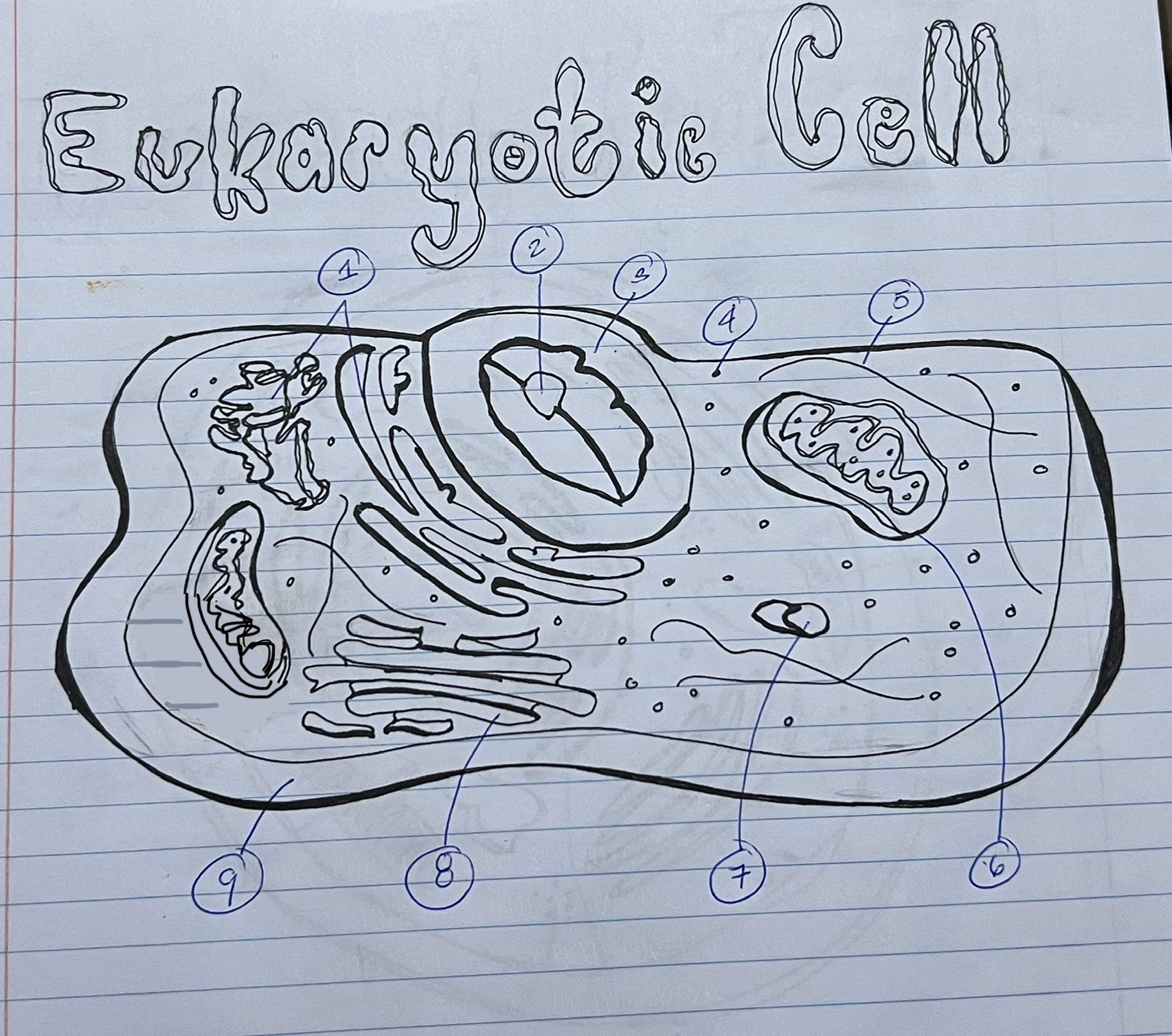
Endoplasmic Reticulum – membranes that carry material through the cell and play a role in protein modification and lipid synthesis; has two parts: rough ER (contains ribosomes) and smooth ER (does not contain ribosomes)
Nucleolus – stores genetic information; controls all cell activities
Nucleus – houses the cell’s DNA in the form of chromatin and directs the synthesis of ribosomes and proteins.
Ribosomes – the cellular structures responsible for protein synthesis.
Cytoplasm – made up of organelles suspended in the gel-like cytosol, the cytoskeleton, and various chemicals; comprises the contents of a cell between the plasma membrane and the nuclear envelope
Mitochondria – breaks down sugar into energy for the cell
Peroxisome – carry out oxidation reactions that break down fatty acids and amino acids.
Golgi Apparatus – flattened membrane discs that package and sort proteins
Plasma Membrane – made up of a phospholipid bilayer with embedded proteins that separates the internal contents of the cell from its surrounding environment.
We use cookies to ensure that we give you the best experience on our website. If you continue to use this site we will assume that you are happy with it.Accept