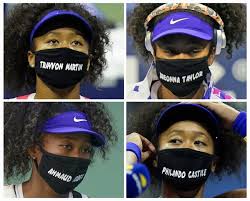
In 2020, tennis champion Naomi Osaka used her platform at the U.S. Open to speak out against racial injustice in a deeply personal and powerful way. Over the course of the tournament, she wore seven different face masks, one for each match each bearing the name of a Black American who had been a victim of racial violence, including Breonna Taylor, George Floyd, and Ahmaud Arbery. This simple but symbolic gesture brought global attention to systemic racism and showed how athletes can use the field of play as a stage for activism.
Osaka’s decision was not just about personal expression, it was a deliberate act of solidarity with the Black Lives Matter movement. It helped bridge the worlds of sport and social justice at a time when protests were erupting across the U.S. following high-profile killings of unarmed Black people. Her act sparked conversation not only within tennis circles but across the broader sports world, where athletes were increasingly speaking up about social issues. Media coverage played a significant role in how Osaka’s activism was received. Mainstream outlets like CNN, The New York Times, and ESPN framed her actions as both courageous and timely. They highlighted her multicultural identity as a biracial woman of Haitian and Japanese descent and how that shaped her perspective on race and activism. Most traditional media treated her protest with respect, portraying it as a thoughtful and powerful stand rather than and powerful stand rather than a controversial move.

On social media, the response was even more dynamic. Fans and fellow athletes alike took to Twitter and Instagram to express support. The visibility of her masks and the stories behind each name went viral, sparking conversations around police brutality, racial profiling, and systemic injustice. Hashtags like #SayTheirNames and #BlackLivesMatter were often used alongside posts about Osaka, helping her message travel far beyond the tennis court.
Importantly, Osaka took control of her narrative. She used her own platforms to explain the meaning behind the masks and to keep the focus on the individuals being honored. She didn’t wait for the media to define her story—she defined it herself. In doing so, she ensured that the conversation centered on justice, not controversy. The media, in this case, amplified rather than diluted the impact of her protest. Naomi Osaka’s actions during the 2020 U.S. Open are a clear example of how athletes can influence public dialogue far beyond their sport. Her protest was quiet, yet powerful—and thanks to thoughtful media coverage and her own voice, its message echoed around the world